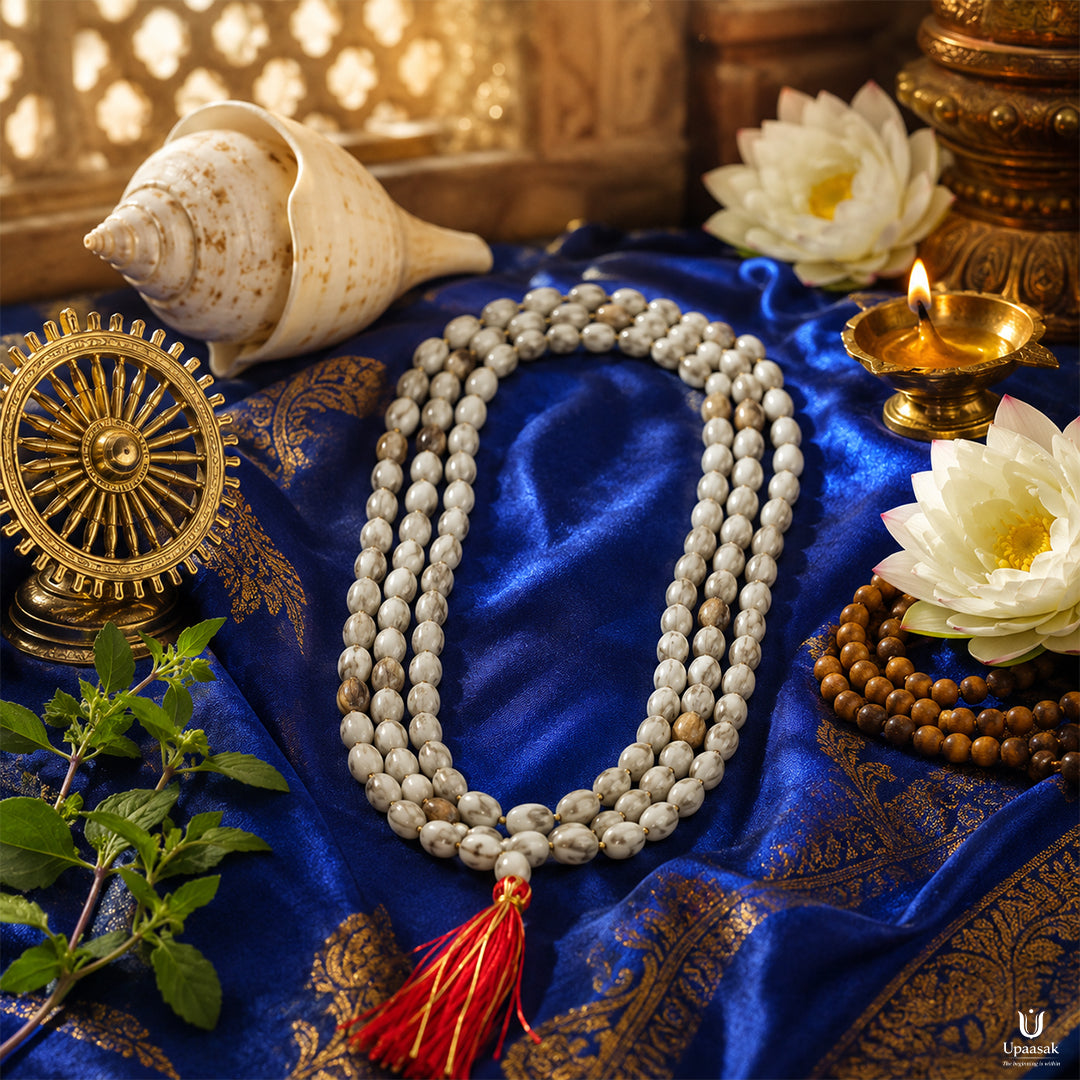
The 5 Mukhi Rudraksha is available in three primary wearing formats — mala, bracelet, and pendant — and choosing between them is less about which is spiritually superior and more about understanding which best serves your specific practice, lifestyle, and intention. Each form has distinct advantages and traditional contexts. This guide walks through all three so you can make an informed, intentional choice.
5 Mukhi Rudraksha Mala
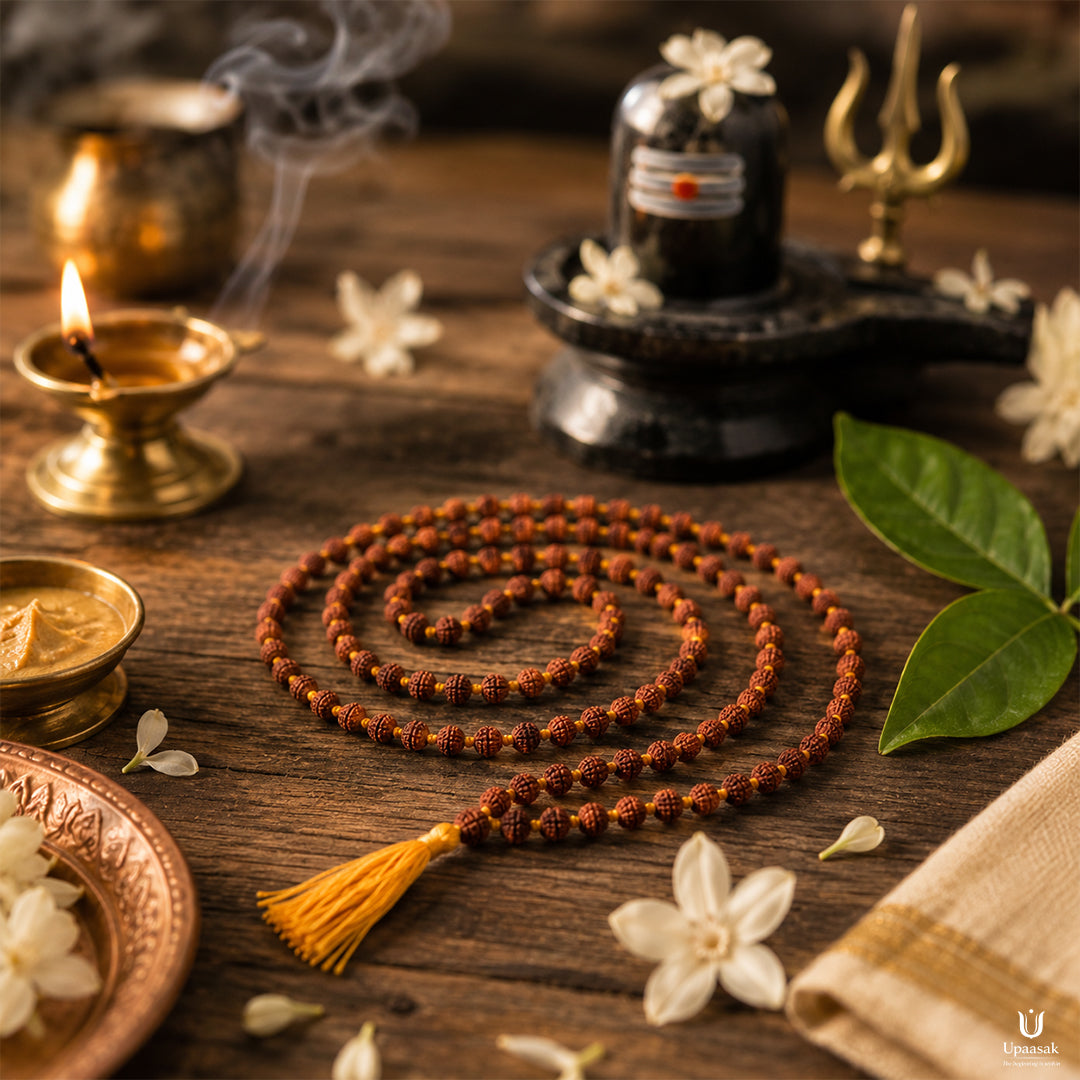
A 5 Mukhi Rudraksha mala is a string of 108 beads (plus one sumeru or guru bead) used primarily for japa — the repetitive chanting of mantra. The mala is the oldest and most traditionally significant form of Rudraksha wearing, deeply embedded in Shaiva, Vaishnava, and tantric practice.
Primary uses:
- Counting mantra repetitions during japa (108 per round)
- Meditation focal object — held and moved through the fingers during dhyana
- Sustained sadhana practice — daily or weekly mantra chanting sessions
- Formal puja contexts and religious ceremonies
Traditional significance:
The 108-bead mala holds specific numerical significance — 108 appears across Vedic mathematics, upanishadic texts, and astronomical calculations. Completing one full round of 108 repetitions (one mala) is considered a complete cycle of mantra energy.
Practical considerations:
- Not ideal for continuous daily wear — the mala is typically used during practice and then stored or worn loosely around the neck
- Requires more care and handling than a bracelet
- A Nepali-origin 5 Mukhi Rudraksha mala represents a significant investment (₹3,000–₹20,000+ depending on bead size and quality)
- Best suited for serious japa practitioners or those with an established daily sadhana practice
5 Mukhi Bracelet
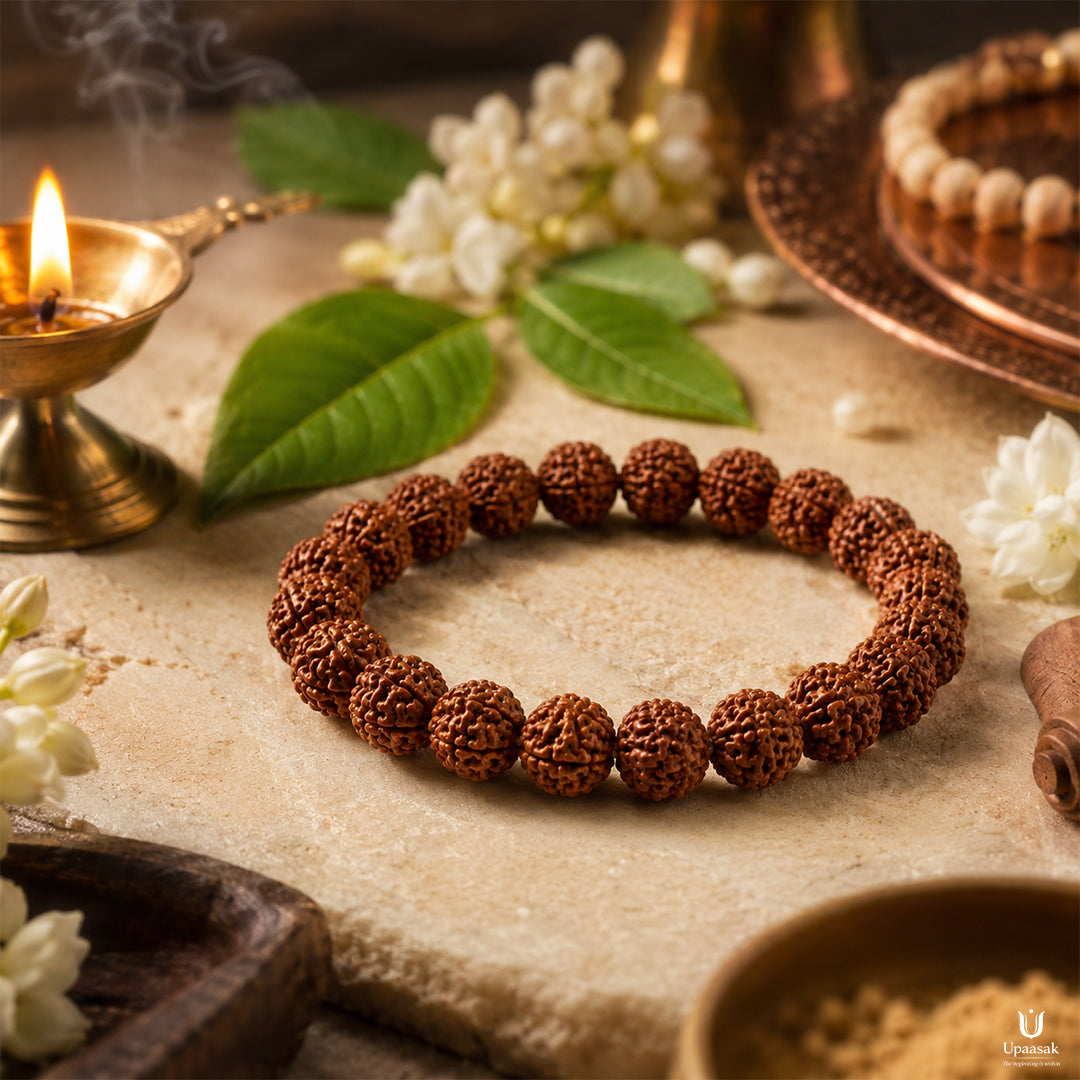
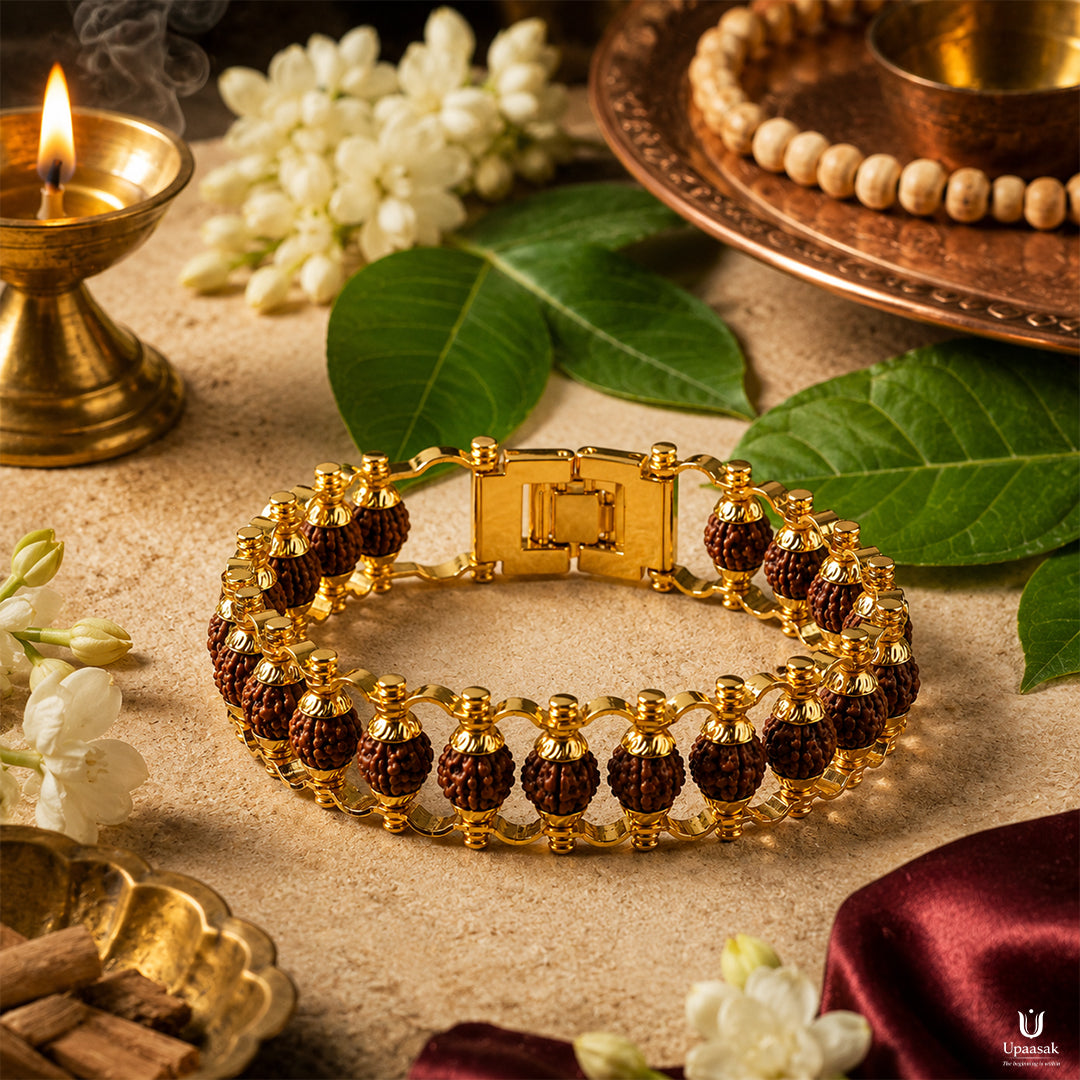
The bracelet format brings the 5 Mukhi Rudraksha into everyday life in its most accessible form. Using 18–27 beads (depending on bead size and wrist circumference), the bracelet provides continuous skin contact throughout the day with minimal maintenance or ritual attention required.
Primary uses:
- Daily devotional wearing — keeping Shiva's blessings present throughout the day
- Office and work-day spiritual practice
- Continuous skin contact without formal japa practice
- Entry-level Rudraksha practice for those new to the tradition
Traditional significance:
Wrist wearing on the right wrist is a valid and well-established form in Rudraksha tradition. The continuous skin contact it provides is considered equivalent in traditional value to pendant wearing — the bead is always present, always in contact, always active.
The 5 Mukhi Rudraksha bracelet for daily Shiva protection from Upaasak is designed precisely for this daily-wear purpose — Nepali-origin beads on a durable elastic cord that survives the demands of regular daily use.
Practical considerations:
- Most accessible format for beginners
- Comfortable for work, study, and daily activity
- Requires periodic cleaning and elastic cord replacement
- Less formal than a mala but more consistent in daily contact
5 Mukhi Pendant
A single-bead 5 Mukhi Rudraksha pendant on a thread, silver wire, or chain worn around the neck is the most traditional and widely practised solo-bead format. Close to the heart (Anahata chakra), the pendant maintains continuous skin contact in a position considered particularly auspicious in the tradition.
Primary uses:
- Devotional wearing close to the chest
- Formal spiritual and religious contexts
- Paired with other Rudraksha in a multi-bead necklace combination
- Traditional family practice — parents often gift a Rudraksha pendant to children
Traditional significance:
Wearing Rudraksha close to the heart chakra connects the bead's energy to the seat of devotion and love in the Vedantic subtle body framework. Many traditional practitioners prefer pendant wearing for its proximity to the chest — considered the most sacred area of the body for divine energy to interact with.
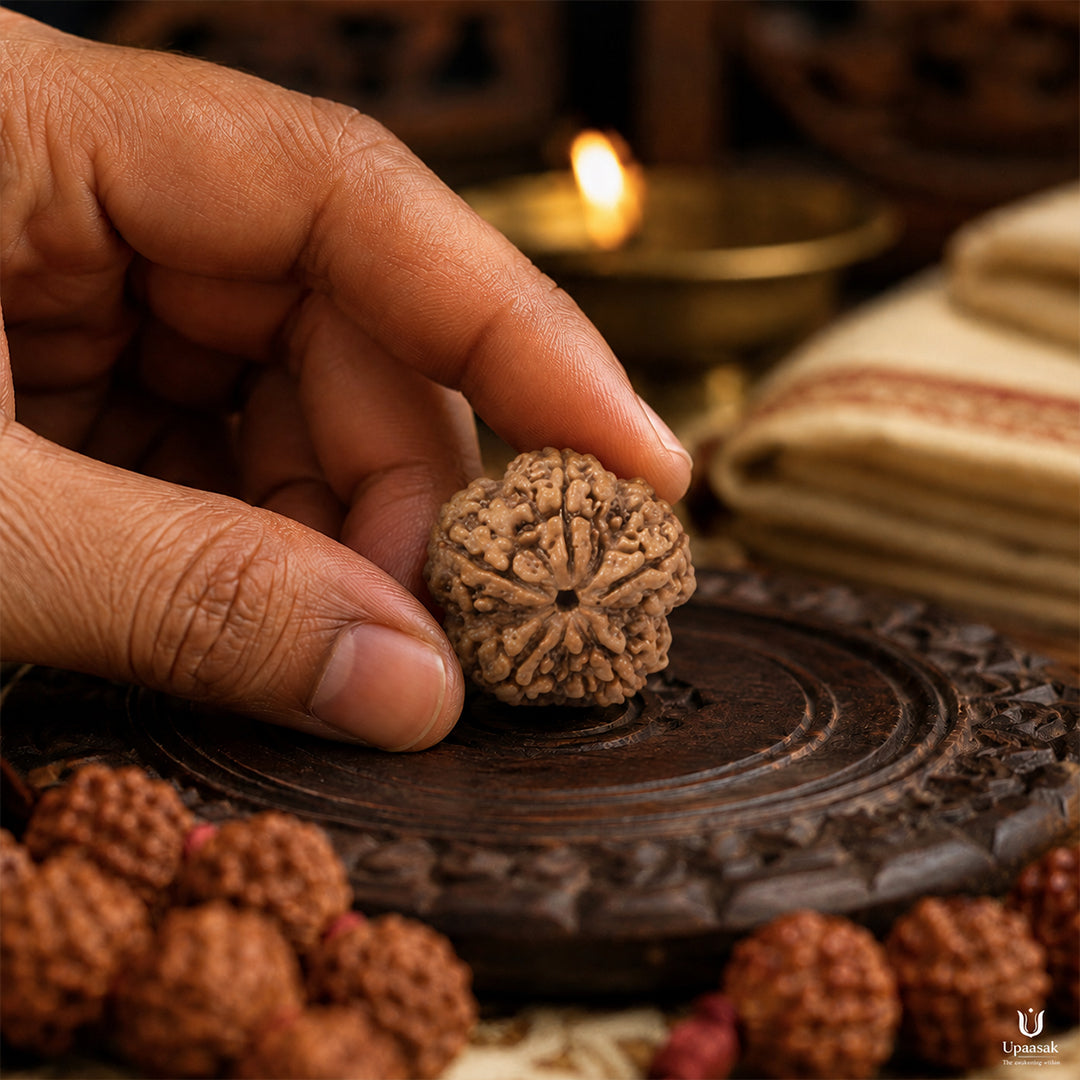
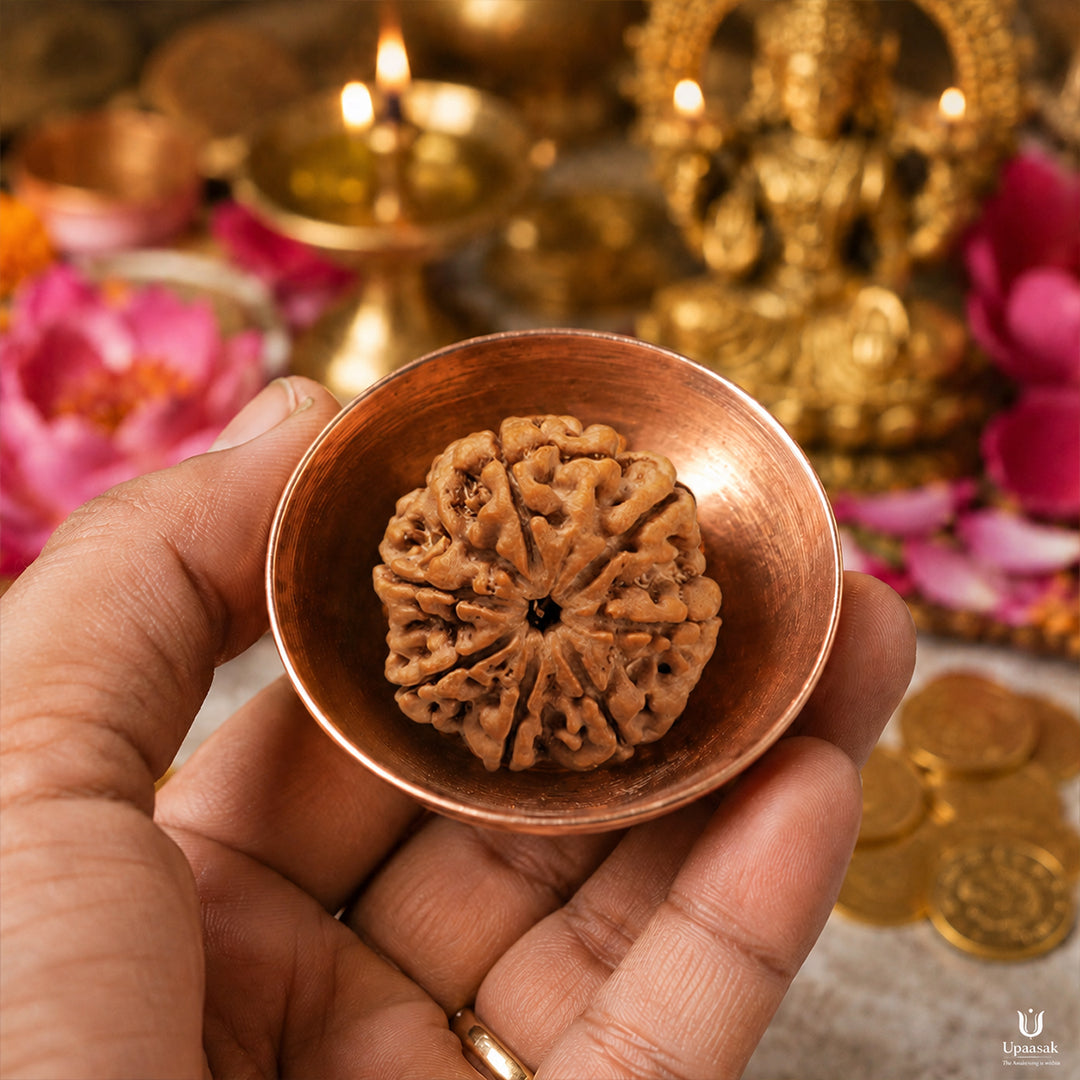
The natural 5 Mukhi Nepali Rudraksha from Upaasak is ideal for pendant use — a single, well-formed Nepali bead that can be strung on a red silk thread, silver chain, or as part of a custom multi-mukhi combination.
Daily Wear vs Japa
| Purpose | Best Format |
|---|---|
| Daily devotional wearing | Bracelet or pendant |
| Formal japa / mantra counting | Mala (108 beads) |
| Meditation focus object | Mala or pendant held in hand |
| Office / professional setting | Bracelet (right wrist) |
| Festive or religious occasions | Pendant or mala around neck |
| Travel or active lifestyle | Bracelet (secure, less delicate) |
Skin Contact & Traditional Practice
All three formats provide skin contact — the core traditional requirement for Rudraksha wearing. The tradition does not privilege one form of skin contact over another. A wrist bracelet in constant contact is considered equivalent to a pendant in constant contact with the chest.
What matters is:
- Consistent wearing (not occasional)
- Genuine devotion and mantra practice
- Proper purification and energization
- Regular care and maintenance
Choosing the Right Format
Choose based on your honest self-assessment:
- If you want to start a japa or mantra practice: Begin with a mala
- If you want daily spiritual presence without formal ritual: Choose a bracelet
- If you follow a traditional pendant-wearing family practice: Continue with a pendant
- If you are new to Rudraksha: Start with a bracelet for ease, add a pendant or mala as your practice deepens
Explore the full Rudraksha collection for all available formats across multiple mukhi varieties.
FAQ
Is a 5 Mukhi Rudraksha mala better than a bracelet?
Neither is superior — they serve different purposes. A mala is best for japa and formal meditation practice. A bracelet provides convenient daily wearing with continuous skin contact. Choose based on your practice style and daily lifestyle.
Can 5 Mukhi Rudraksha be worn as a pendant?
Yes — a single-bead pendant close to the heart is one of the most traditional wearing forms. It provides continuous skin contact and holds deep devotional significance in the Rudraksha tradition.
How many Rudraksha should be worn together?
The tradition does not specify a fixed number. Many practitioners wear a pendant alongside a bracelet, or combine multiple mukhis in a single mala. What matters is intentional wearing, proper energization, and genuine devotion — not a specific quantity.