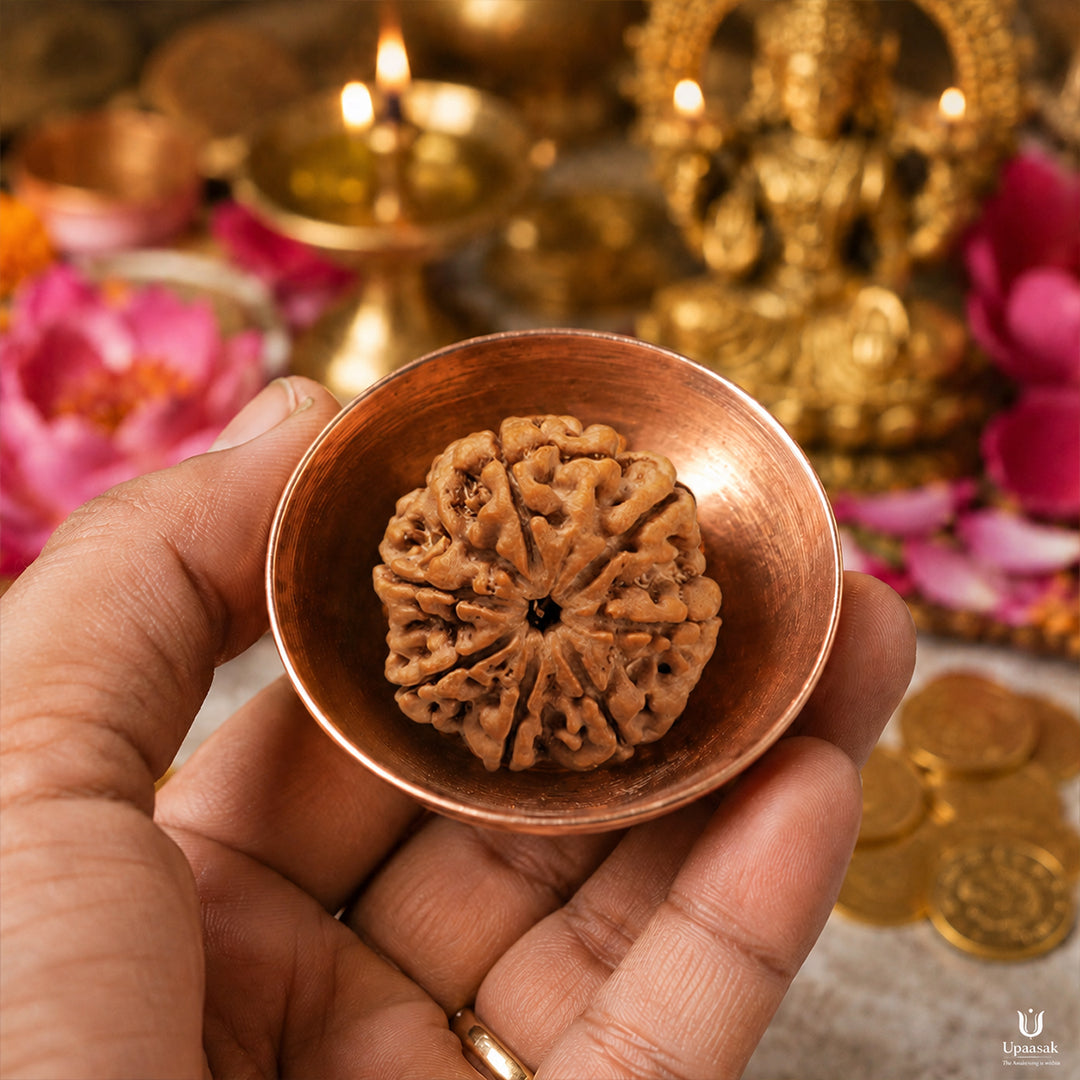
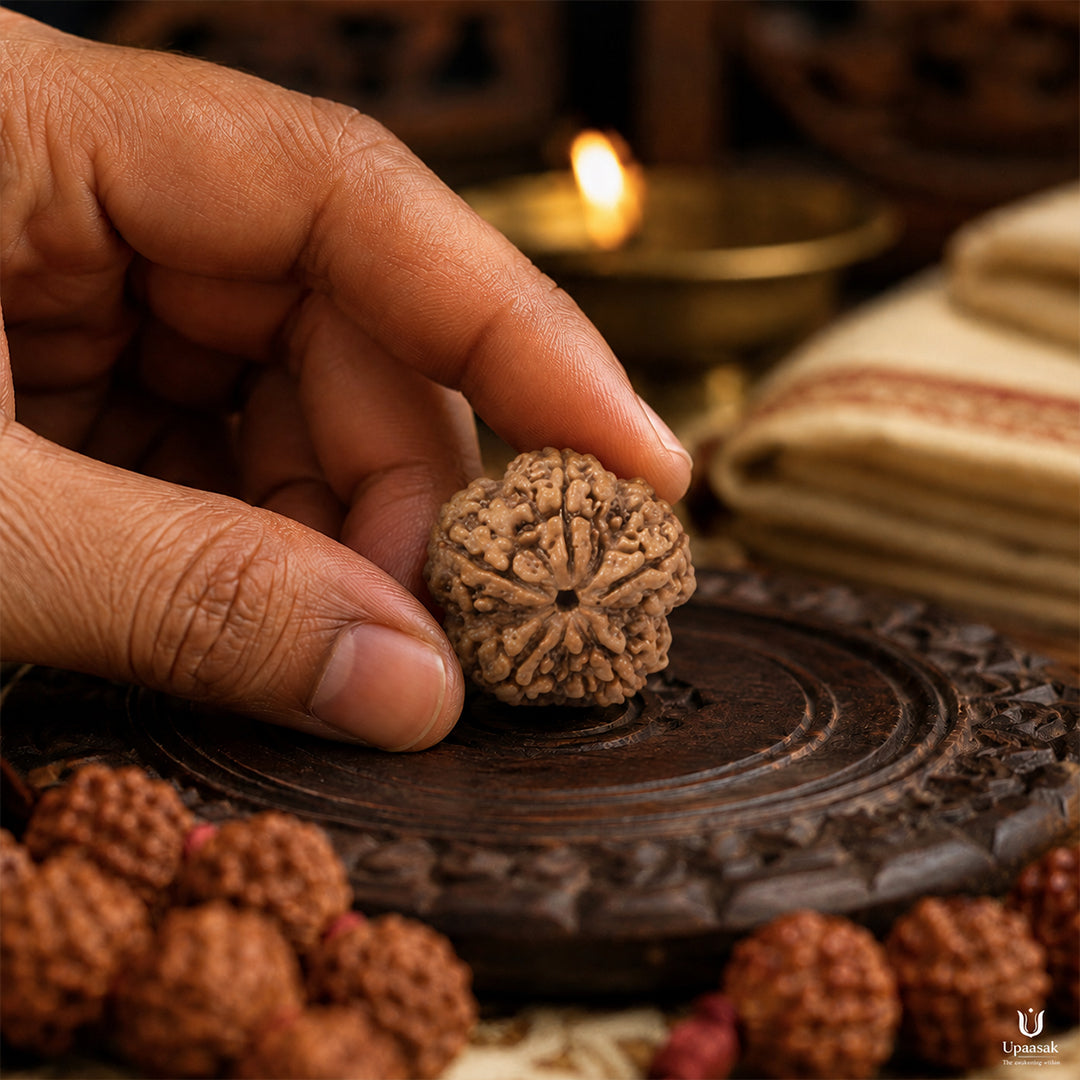
The 7 Mukhi Rudraksha mantra is an essential component of the Rudraksha wearing tradition — not merely a ceremonial formality, but the spiritual activation that gives the bead its full sacred significance within Hindu practice. Whether you are wearing the bead for the first time or establishing a regular mantra practice, understanding the correct mantras, their meaning, and the proper method of chanting them is important for anyone approaching this practice with genuine devotion.
Why Mantra Is Used With Rudraksha
In the Vedic tradition, a Rudraksha bead is considered a living sacred object — one that carries the energetic imprint of Lord Shiva. The mantra serves as the means by which the wearer establishes a personal connection between themselves, the bead, and the deity it represents. Chanting the prescribed mantra:
- Activates (energises) the bead for personal use
- Sets a clear spiritual intention
- Creates a devotional relationship with the presiding deity (for 7 Mukhi, Goddess Mahalakshmi and Lord Shiva)
- Purifies the wearer's mind and intentions before wearing
Without mantra, the bead may still carry traditional significance — but it lacks the intentional activation that traditional practice considers essential.
7 Mukhi Rudraksha Beej Mantra
The specific beej (seed) mantra for the 7 Mukhi Rudraksha is:
"Om Hum Namah"
This is the mantra prescribed in traditional Rudraksha texts for the seven-faced bead. "Hum" is the beej associated with the seven mukhis, representing the purifying fire of Shiva consciousness and the invocation of Mahalakshmi's grace.
Chant this mantra clearly, with correct pronunciation, ideally on a Rudraksha or Tulsi mala. Each chant counts as one repetition.
Mantra for First Wearing
For the first-time wearing ritual, the following sequence is traditionally recommended:
- Panchakshara Mantra — "Om Namah Shivaya" — chanted to invoke Lord Shiva's blessings before wearing any Rudraksha
- Beej Mantra — "Om Hum Namah" — chanted specifically for the 7 Mukhi's activation
- Mahalakshmi Mantra — "Om Shreem Mahalakshmiyei Namaha" — chanted to invoke Mahalakshmi's prosperity blessings, given her specific association with this bead
Chant each mantra a minimum of 11 times during the first wearing, or complete a full 108 count if time and practice allow.
How Many Times to Chant
| Occasion | Recommended Repetitions |
|---|---|
| First wearing activation | 108 times (full mala) |
| Daily morning practice | 11 or 21 times minimum |
| Weekly Shiva puja | 108 times |
| Saturn-related (Shani) practice | 108 times on Saturdays |
The number 108 is considered sacred in Hindu tradition — it appears across Vedic mathematics, astronomy, and devotional practice. Using a 108-bead mala ensures accurate counting during extended chanting sessions.
108 Jaap Method
To perform a complete 108 jaap with the 7 Mukhi Rudraksha mantra:
- Sit in a clean, quiet space, facing east or north
- Hold a 108-bead Rudraksha or Tulsi mala in your right hand
- Start from the bead adjacent to the sumeru (the guru bead — the large central bead) and move away from you with each chant
- Do not cross the sumeru — when you reach it, reverse direction for the next round
- Chant "Om Hum Namah" clearly and intentionally with each bead
- Complete the round (108 beads) and sit quietly for a minute after finishing
Lakshmi Mantra for Prosperity
Given the 7 Mukhi's strong Mahalakshmi association, many devotees pair the beej mantra with a Lakshmi-specific mantra for prosperity-focused practice:
"Om Shreem Hreem Kleem Mahalakshmiyei Namaha"
This is a widely used Mahalakshmi mantra in devotional practice. Chant it 108 times on Fridays (Lakshmi's day) as a supplementary practice alongside the 7 Mukhi Rudraksha mantra.
Om Namah Shivaya With 7 Mukhi
Yes — "Om Namah Shivaya" can always be chanted with any Rudraksha, as all Rudraksha ultimately represent Lord Shiva in the tradition. It is particularly recommended as the opening mantra before the specific 7 Mukhi beej mantra during any wearing or puja ritual.
Simple Daily Jaap Practice
For those new to mantra practice, a simple daily routine:
- Morning (after bath): Chant "Om Namah Shivaya" 11 times, then "Om Hum Namah" 11 times while holding or wearing the bead
- Gradually increase to 108 repetitions as your practice deepens
- Consistency matters more than duration — 11 mindful repetitions daily outperform occasional 108-count chanting
Mantra vs Energisation
Pre-energised Rudraksha beads — available from trusted sellers — are purified and charged with mantra before dispatch. However, this does not replace the wearer's own daily mantra practice. The energisation at the seller's end creates the initial activation; the wearer's ongoing chanting deepens and sustains the bead's sacred connection.
The natural 7 Mukhi Nepali Rudraksha from Upaasak is available with traditional energisation. For all available Rudraksha forms and accessories, explore the full Rudraksha collection.
FAQ
What is the 7 Mukhi Rudraksha mantra?
The specific beej mantra for the 7 Mukhi Rudraksha is "Om Hum Namah." It is chanted during the first wearing and as part of a regular daily or weekly jaap practice.
What is the beej mantra of 7 Mukhi Rudraksha?
"Om Hum Namah" is the prescribed beej mantra. For prosperity-specific practice, it is paired with "Om Shreem Mahalakshmiyei Namaha."
How many times should I chant the mantra?
For first wearing, chant 108 times. For daily practice, a minimum of 11 or 21 repetitions is recommended, building toward 108 over time.
Which mantra should I chant before wearing 7 Mukhi Rudraksha?
Begin with "Om Namah Shivaya" to invoke Shiva's blessing, then chant the beej mantra "Om Hum Namah" for the seven-faced bead specifically.
Can I chant Om Namah Shivaya with 7 Mukhi?
Yes — Om Namah Shivaya is universally appropriate for all Rudraksha wearing. It is recommended as the opening mantra before the specific 7 Mukhi beej mantra in any ritual or daily practice.