The gold plated Rudraksha bracelet price in India varies widely — from under ₹300 to well over ₹1,500 for what can appear to be nearly identical products in different listings. Understanding what drives legitimate price differences — and what is pure marketing inflation — helps you spend sensibly and get genuine value. This guide breaks down every factor that affects cost so you can compare fairly.
What Is a Fair Price for a Gold Plated Rudraksha Bracelet?
Direct answer: The best gold plated Rudraksha bracelets in India are typically priced between ₹500 and ₹900. A bracelet in this range, from a transparent seller with genuine Nepali or Indonesian Rudraksha and proper electroplated finish, represents fair value. Anything priced significantly above ₹1,000 is almost certainly overpriced for what the materials actually are — unless it involves solid gold findings, rare high-mukhi beads, or documented premium certification.
Below ₹300, authentic natural Rudraksha with genuine gold plating is commercially impossible — the material costs alone exceed this threshold.
What Determines Rudraksha Bracelet Price?
Five legitimate factors affect the gold plated Rudraksha bracelet price:
1. Rudraksha Bead Quality
The Rudraksha bead itself is the most significant quality variable. Within genuine natural beads:
- Origin: Nepali Rudraksha — larger, more clearly defined mukhis, denser — commands higher prices than Indonesian-origin beads, which are smaller and more commonly used in bracelet formats
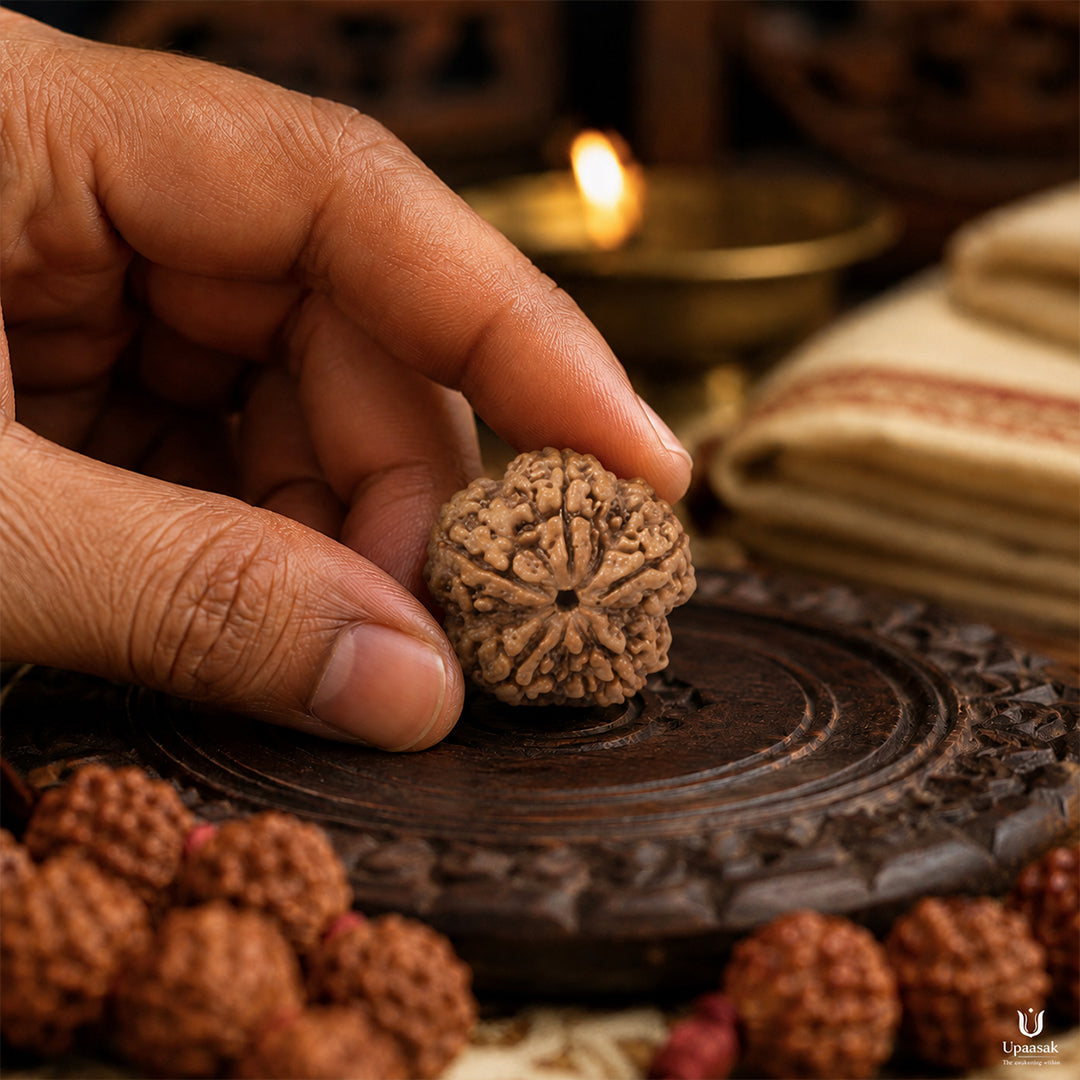
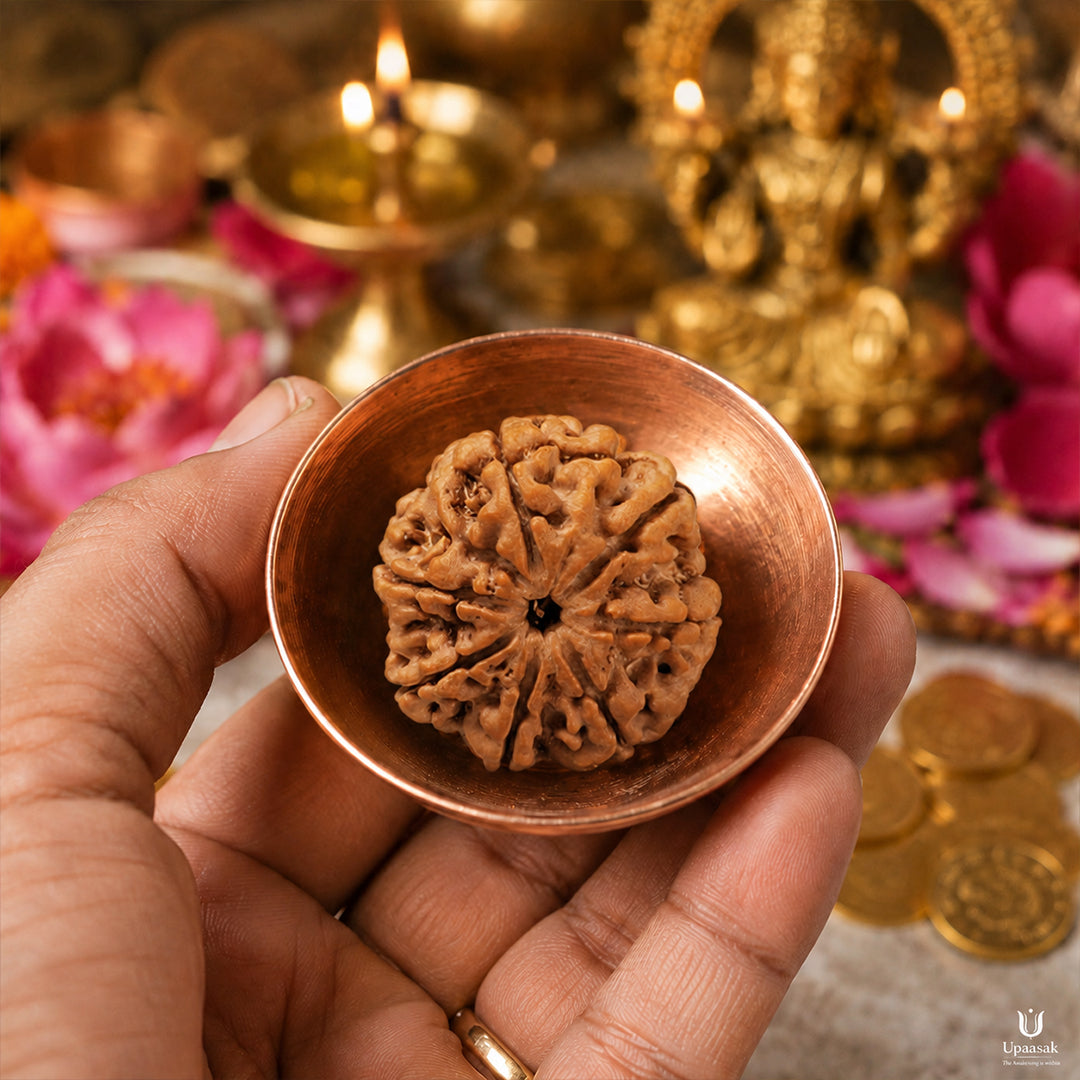
- Mukhi count: Higher mukhi beads (7 Mukhi, 8 Mukhi) are rarer than 5 Mukhi and priced accordingly
- Surface definition: Beads with clear, well-defined natural mukhis and clean surfaces are selected from larger batches — this selection process adds cost
- Bead size: Larger-diameter beads require more raw material per piece
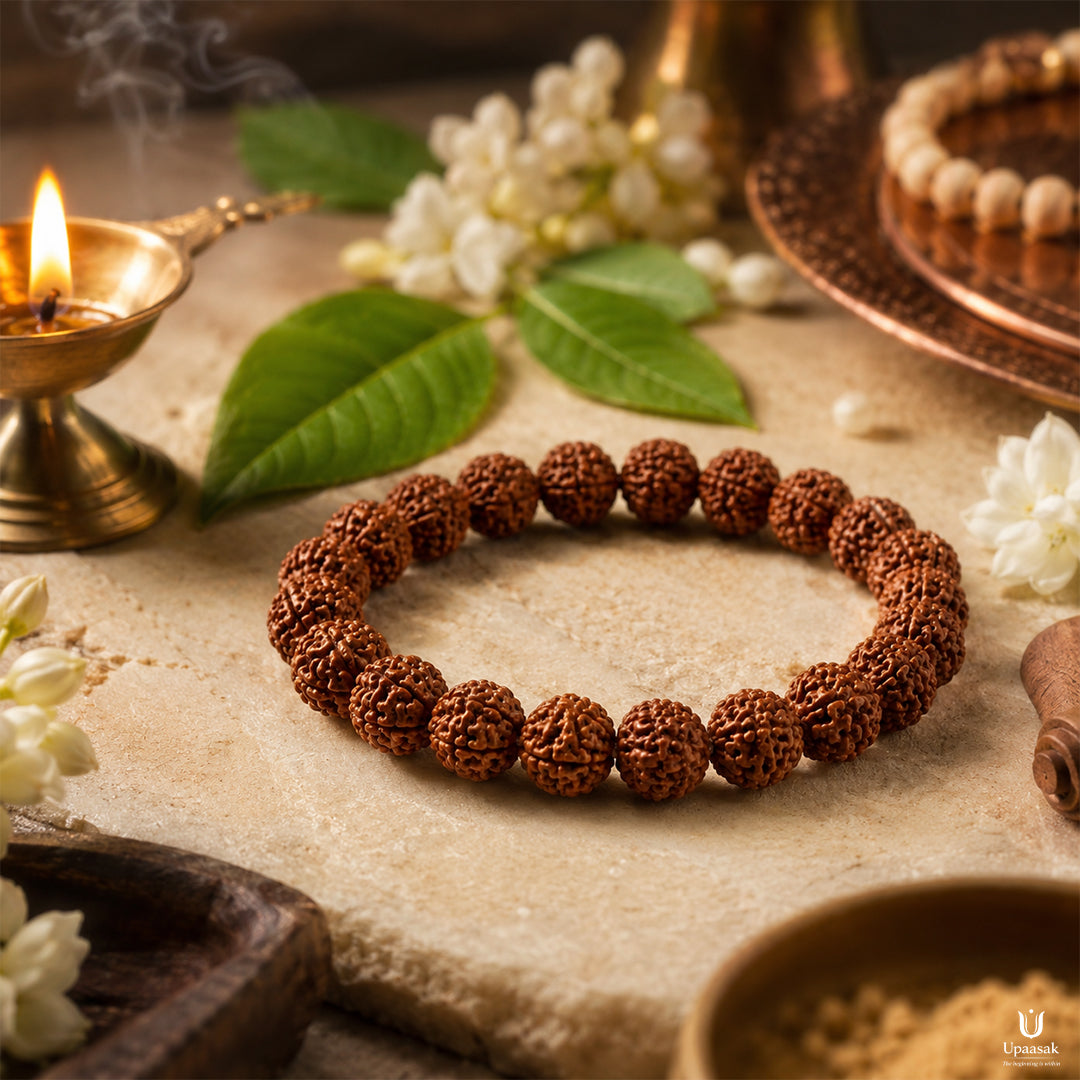
The natural 5 Mukhi Nepali Rudraksha represents the standard bead used in most everyday Rudraksha bracelets — its Nepali origin places it at the quality-justified end of the price range. For those interested in 7 Mukhi specifically, the natural 7 Mukhi Nepali Rudraksha carries a higher per-bead cost reflecting its relative rarity.
2. Gold-Plated Finish
Gold plating quality affects both appearance and longevity — and therefore price:
- Plating thickness: Measured in microns. Thicker plating lasts longer and costs more to apply. Standard plating is 0.5–2.5 microns; premium plating reaches 3–5 microns
- Base metal: Brass or copper alloy base accepts plating better than cheaper alloy mixes
- Plating process: Professional electroplating facilities produce more consistent, durable finishes than informal operations
A bracelet with properly applied, adequately thick gold plating over quality brass will look better for longer — and costs more to produce than thin paint-like gold coating over cheap alloy.
3. Bead Count & Size
A standard adult wrist bracelet typically uses 18–27 Rudraksha beads depending on bead diameter. Larger beads mean fewer beads per bracelet but higher per-bead cost. More beads (smaller diameter) require more total seed material.
Both bead size and count affect the overall gold plated Rudraksha bracelet price proportionally — a bracelet with 10mm beads costs more than one with 7mm beads of equivalent quality.
4. Design & Workmanship
Design complexity affects cost:
- Simple alternating Rudraksha and gold-plated spacer beads: most affordable
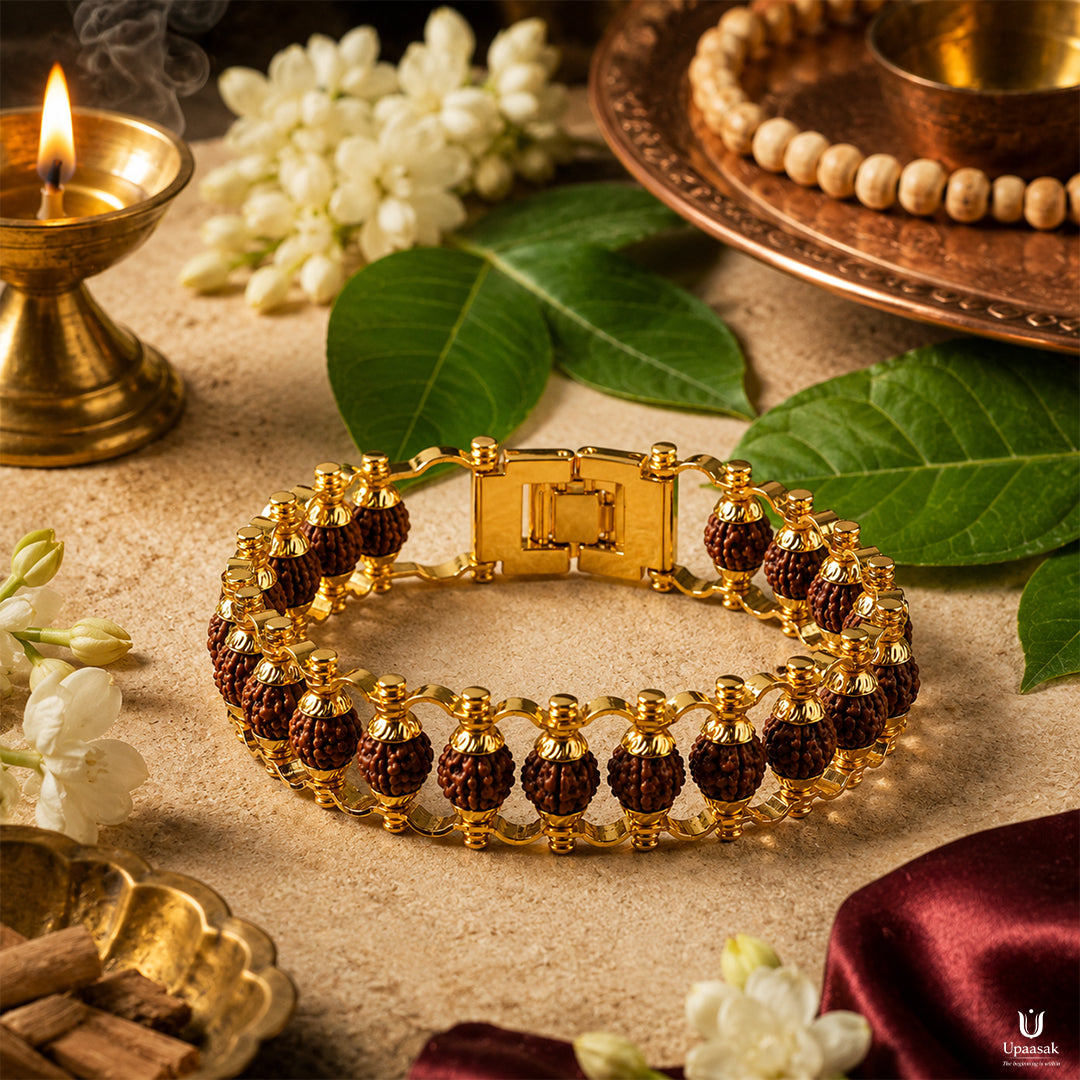
- Elaborate gold-capped individual beads with connector links: higher production cost
- Custom or artisanal designs: highest cost, justified only when workmanship is genuinely superior
Clean, consistent bead alignment, secure knotting, quality elastic cord, and even plating across all metal components all indicate workmanship quality — and add legitimate cost.
5. Certification
Third-party certification of Rudraksha authenticity adds a modest but justified cost premium — typically ₹100–₹300 above an equivalent uncertified bracelet. This cost buys documented verification of the mukhi count, natural bead status, and origin.
Price vs Quality: A Reference Framework
| Price Range | What It Typically Reflects |
|---|---|
| Under ₹300 | Imitation beads, paint coating, no genuine material |
| ₹300 – ₹499 | Possible genuine lower-grade beads, minimal plating |
| ₹500 – ₹900 | Fair range — genuine Rudraksha, proper plating, honest seller |
| ₹900 – ₹1,500 | Justified only with premium bead selection, thick plating, or certification |
| Above ₹1,500 | Overpriced unless rare mukhi, solid gold findings, or exceptional documentation |
Comparing Prices Fairly
When comparing two gold plated Rudraksha bracelets at different price points, check whether the higher price reflects:
- A higher mukhi count (7 vs 5 Mukhi)
- Nepali vs Indonesian origin beads
- Thicker or better-documented plating
- Larger bead diameter
- Certification documentation
- Better workmanship visible in product photography
If the higher price is justified only by marketing language — "premium," "blessed," "AAA" — without corresponding material specifics, it is not justified at all.
The gold plated Rudraksha bracelet from Upaasak is priced to reflect genuine Rudraksha beads and proper gold-plated finish — consistent with the ₹500–₹900 fair value range for authentic product. Explore the full Rudraksha collection for available formats at various price points with clear material descriptions.
FAQ
How much does an authentic gold plated Rudraksha bracelet cost?
A genuine gold plated Rudraksha bracelet with natural beads and proper plating typically falls between ₹500 and ₹900 in India. Below ₹300 is almost certainly imitation; above ₹1,000 is overpriced unless rare materials or certification are involved.
Why do Rudraksha bracelets have different prices?
Bead origin (Nepali vs Indonesian), mukhi count, bead size, plating quality, design workmanship, and certification all create legitimate price variation. Marketing claims without material specifics do not justify higher prices.
Is expensive Rudraksha always better?
No. A high price backed only by vague claims is not justified. A fair price with transparent material information — bead origin, mukhi count, plating specification — is far more meaningful than an inflated price with no specifics.
What is the price of a 5 Mukhi gold plated Rudraksha bracelet?
A genuine 5 Mukhi Rudraksha bracelet with gold-plated finish from a transparent seller in India should fall within ₹500–₹900. This reflects natural Indonesian-origin 5 Mukhi beads with proper electroplated components and quality construction.