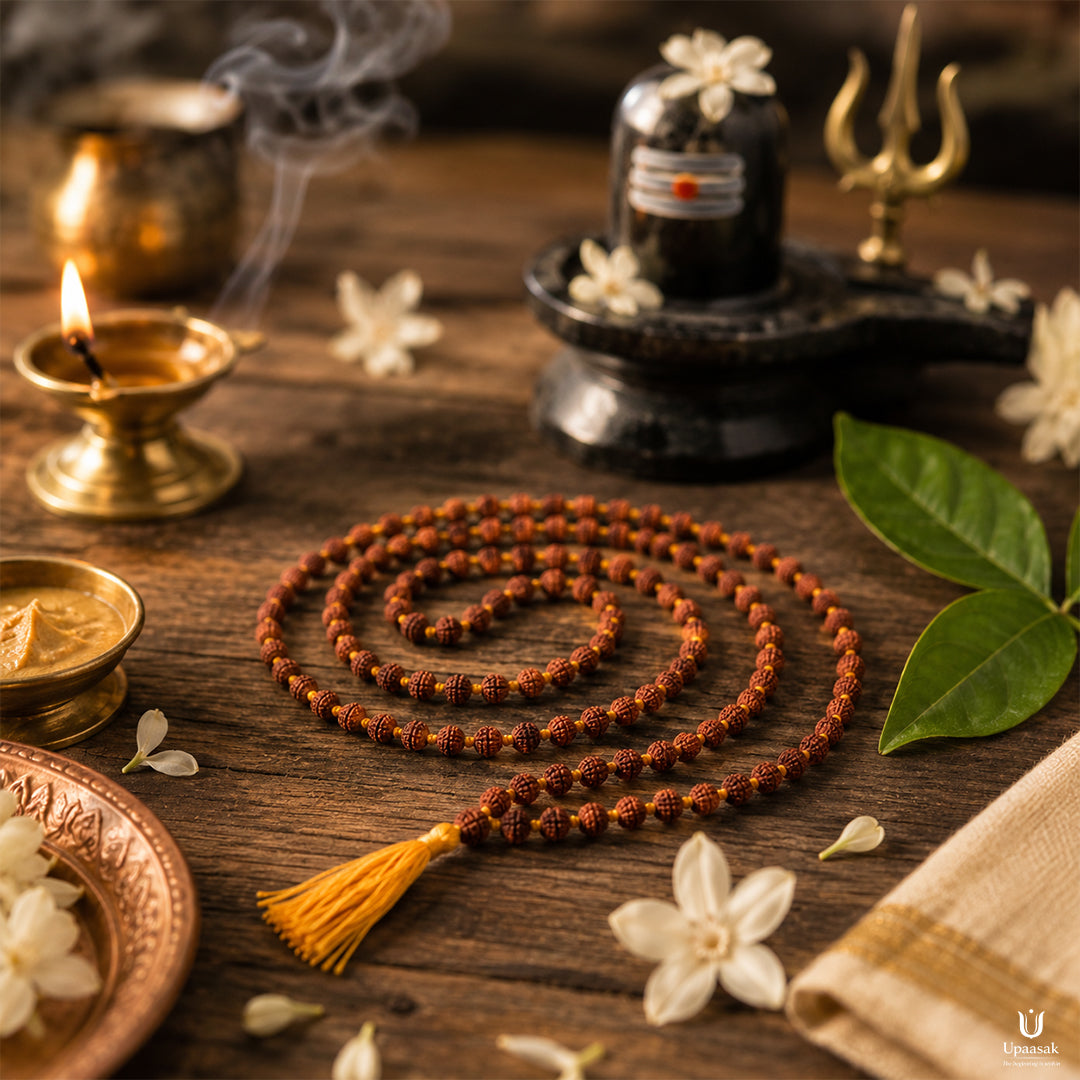
A gold plated Rudraksha bracelet combines two elements that each need to be verified separately: the quality of the metal plating and the authenticity of the Rudraksha beads themselves. While gold plating is visible to the eye at the surface level, identifying genuine Rudraksha beads requires understanding what natural seeds look like, how their mukhis form, and why organic variation is a sign of authenticity rather than a flaw. This guide covers everything a buyer needs to know.
What Is a Rudraksha Bead?
A Rudraksha bead is the dried seed of the Elaeocarpus ganitrus tree — a species that grows primarily in the Himalayan region of Nepal, with secondary cultivation in Indonesia and parts of India. The seed is enclosed in a blue-green fleshy fruit while on the tree; once the fruit falls and is processed, the dried seed inside becomes the Rudraksha bead used in spiritual jewellery.
Genuine Rudraksha beads are organic, naturally variable, and each unique. They are not manufactured, moulded, or produced to a uniform specification — which is the single most important fact a buyer needs to understand when examining them.
What Does Mukhi Mean?
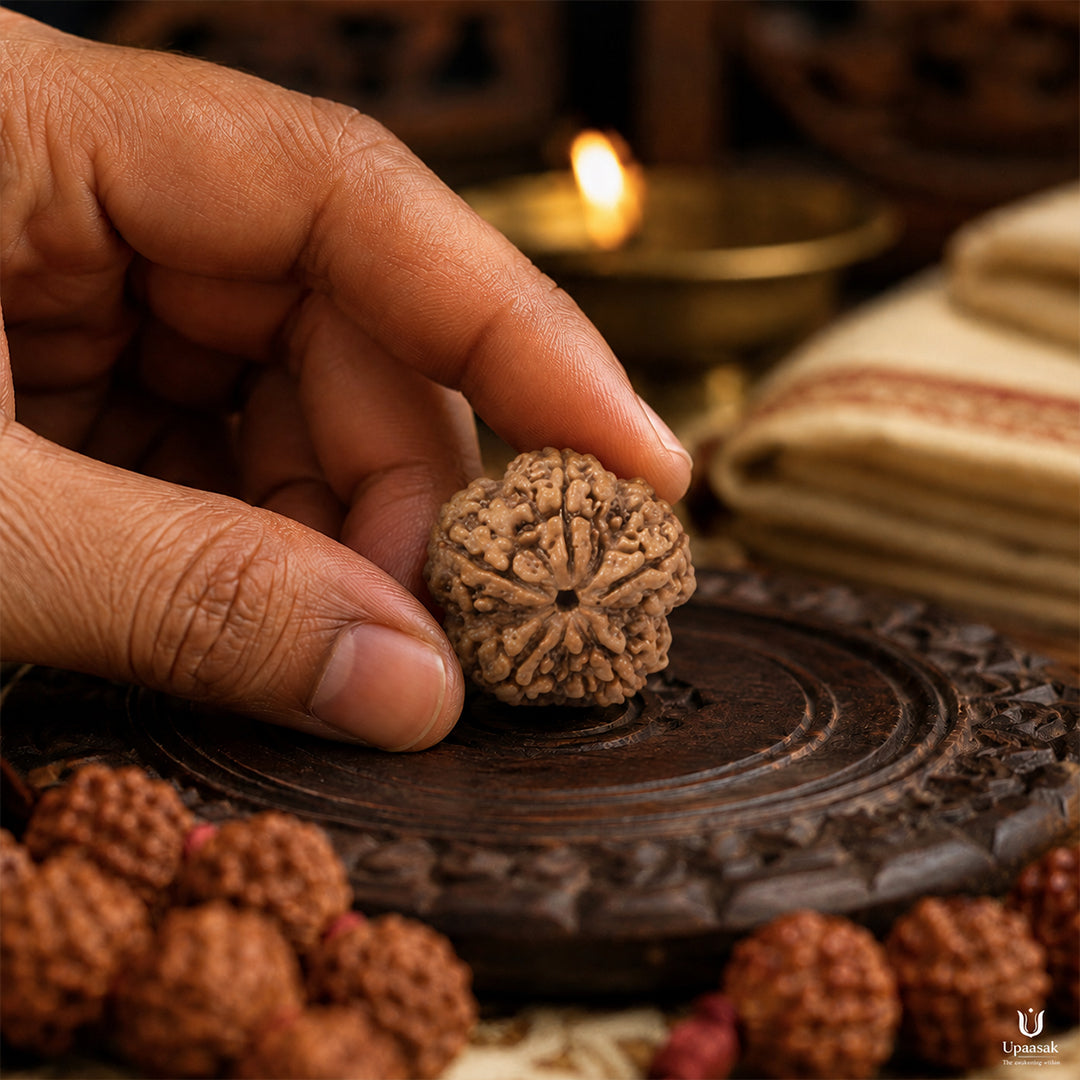
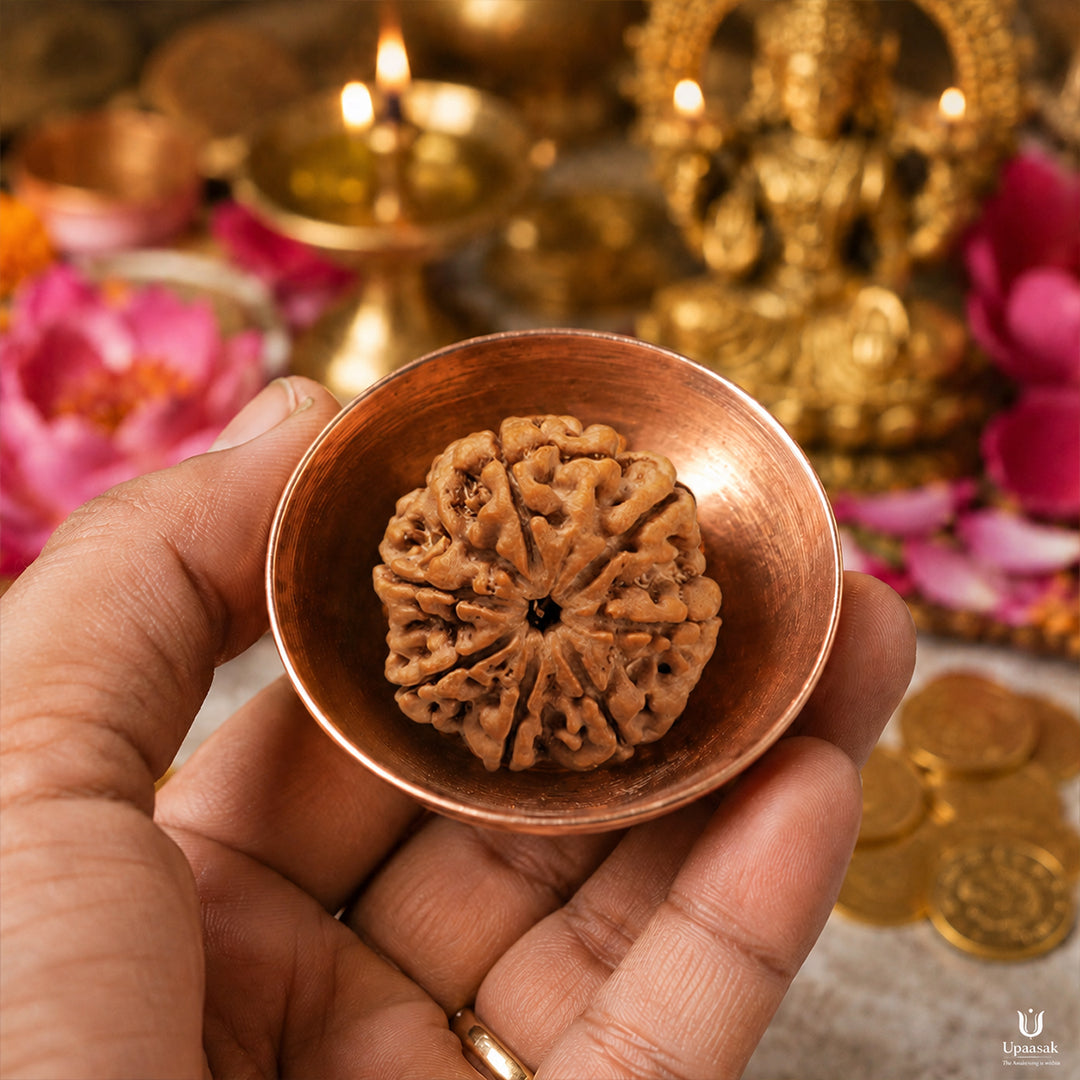
Mukhi means "face" in Sanskrit — and on a Rudraksha bead, it refers to the naturally formed lines or segments that run from the top (where the stem attached to the tree) to the base of the bead. These lines divide the bead's surface into faces, and their count determines the bead's mukhi number.
- A 5 Mukhi Rudraksha has five natural lines dividing it into five segments
- A 7 Mukhi Rudraksha has seven natural lines
- Each mukhi corresponds to one internal seed compartment — verifiable through X-ray testing
- The mukhi count cannot be altered without leaving detectable evidence
For genuine Rudraksha beads in jewellery, the 5 Mukhi is the most universally used — suitable for all genders, rashis, and purposes. The natural 5 Mukhi Nepali Rudraksha represents the standard for authentic bead quality in bracelet use.
Natural Rudraksha Features
Genuine Rudraksha beads share a consistent set of physical characteristics that buyers can assess even without specialist equipment:
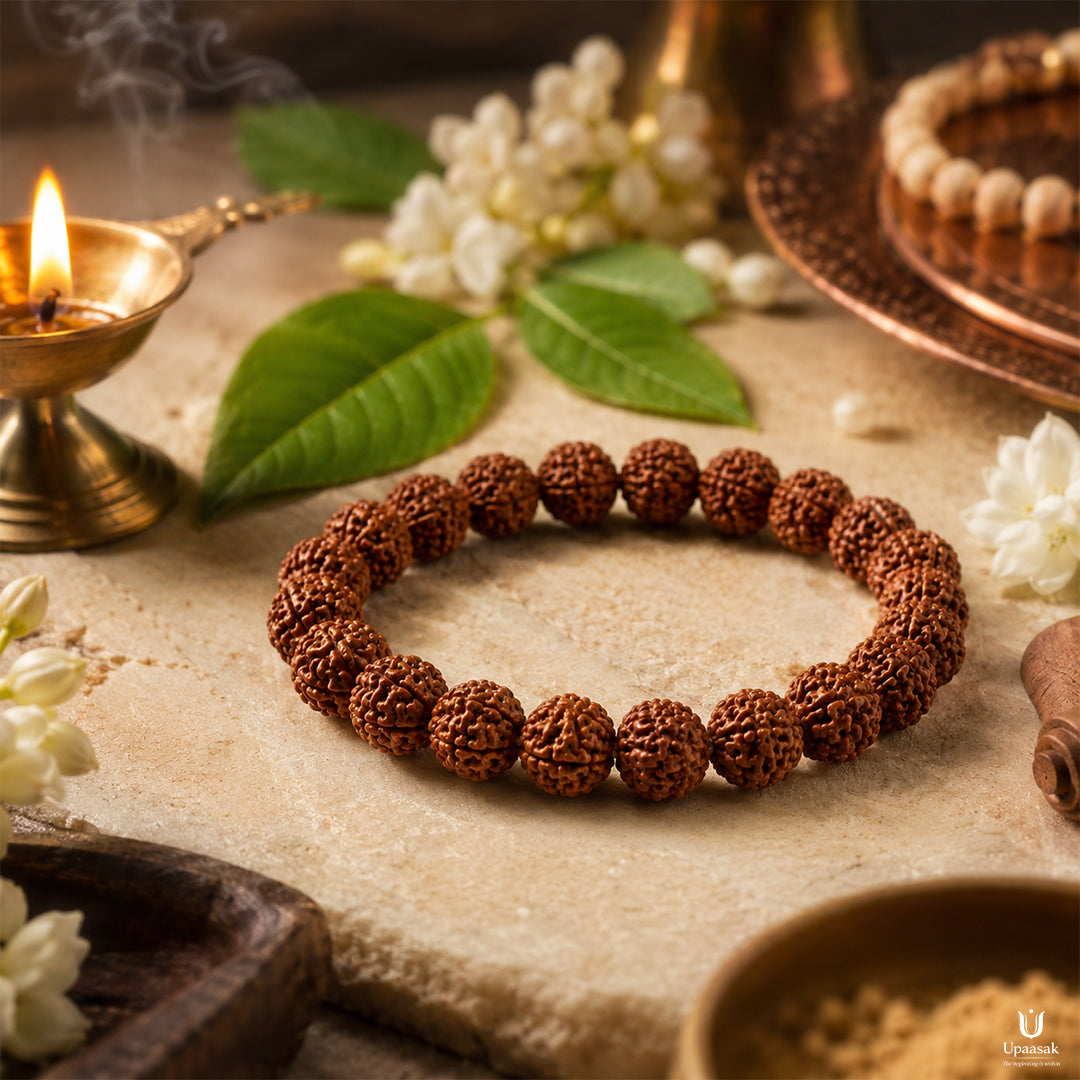
Surface texture: Natural Rudraksha has a rough, complex surface with visible pores and ridges between the mukhis. The texture is organic — not smooth, lacquered, or artificially polished to uniformity.
Colour: Natural dried Rudraksha ranges from light brown to dark reddish-brown. The colour may vary slightly between beads even within the same bracelet. Unusually uniform or artificially darkened colour is a red flag.
Weight: Natural Rudraksha is dense relative to its size. Seeds that feel light or hollow for their visual dimensions warrant closer inspection.
Shape: Genuine Rudraksha is generally round to slightly oval, with a natural top (where the stem scar appears) and base. Perfect geometric spheres are unusual in natural beads and suggest artificial production.
Bead Surface & Mukhi Lines
Examining the mukhi lines directly is the most important step in identifying genuine Rudraksha beads:
Natural mukhi lines:
- Flow continuously from the top of the bead to the base in an organic curve
- Vary slightly in depth and spacing across the bead
- Have natural roughness along their edges
- Converge organically at the top around the stem scar
Artificially carved lines:
- Appear unnaturally uniform, evenly spaced, and mechanically precise
- May not flow continuously to the base
- Can appear sharper and cleaner than natural growth allows
- May show tool marks if examined closely
Size and Shape Variation
Natural Rudraksha beads within the same batch will show size and shape variation — this is normal and expected. Uniformity across a bracelet's beads is actually a quality signal in genuine sets: beads that are too perfectly matched in size, colour, and appearance may have been artificially selected from much larger quantities or may not be natural at all.
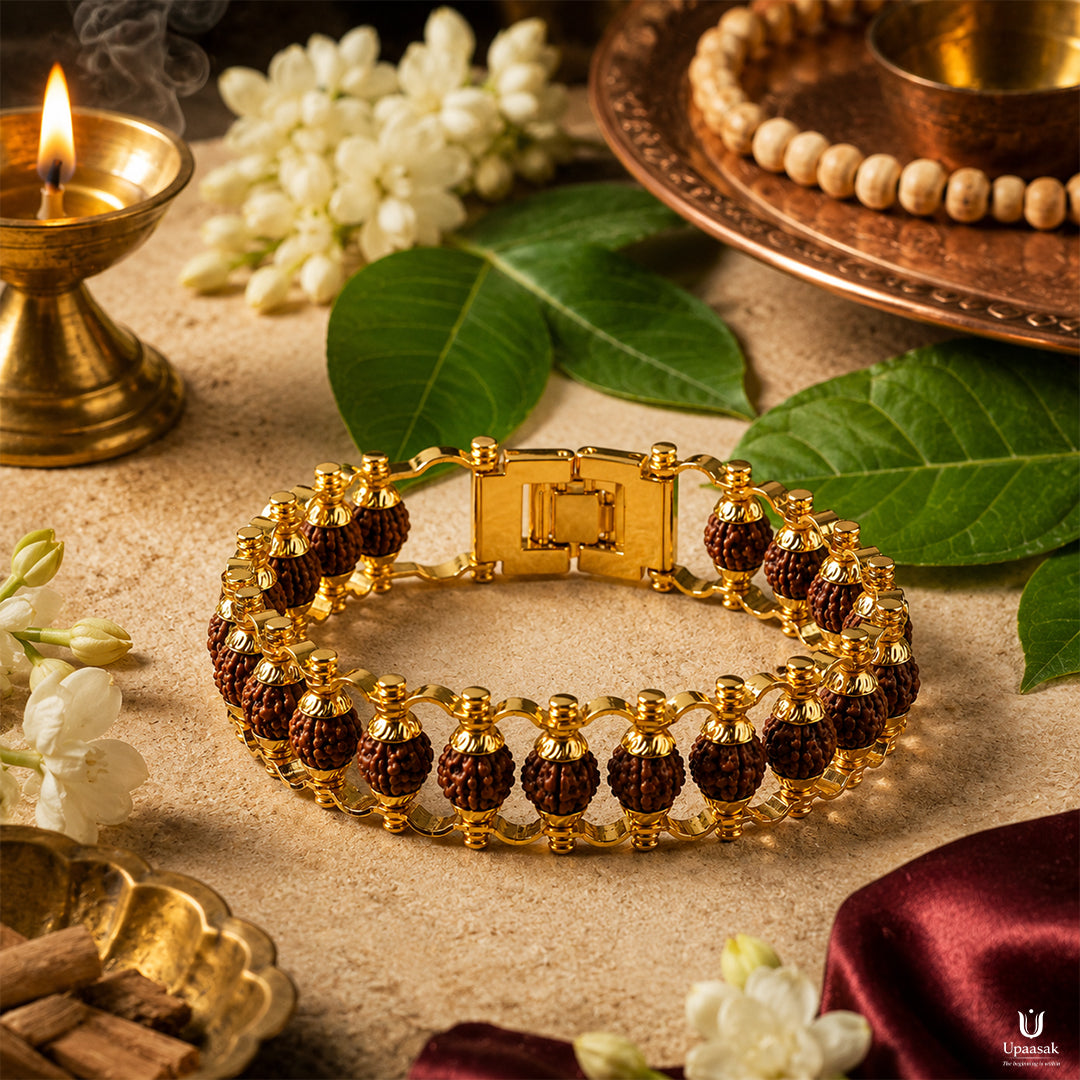
When examining a gold plated Rudraksha bracelet, look for this organic consistency — each bead genuine in character but not robotically identical to its neighbours.
Imitation Rudraksha
Common imitation materials include:
| Material | Visual Clue | Feel Clue |
|---|---|---|
| Carved wood | Too uniform, lines too sharp | Light, hollow-feeling |
| Plastic/resin | Perfect spheres, no pores | Warm, light, slightly flexible |
| Treated real beads | Over-lacquered, unnatural shine | Heavier but surface feels sealed |
| Glass | Smooth, reflective | Cold, very heavy, no texture |
The most common issue with gold plated Rudraksha bracelets specifically is not outright fakes but genuine low-grade or heavily treated beads presented as premium quality. Lacquering Rudraksha beads to improve their appearance is common practice — but heavy lacquering obscures the natural pores and surface character that identify authentic beads.
The Rudraksha bracelet for daily Shiva protection and gold plated Rudraksha bracelet from Upaasak use natural Rudraksha beads with clear bead composition information — the transparency standard that buyers should expect from any reputable seller.
X-Ray & Laboratory Testing
X-ray or CT scanning is the most definitive method for identifying genuine Rudraksha beads. The internal structure of a genuine bead shows seed compartments equal in number to its external mukhi count. No imitation or carved seed replicates this internal structure.
Some reputable sellers and gemological labs offer X-ray authentication for individual beads or small lots — particularly useful when purchasing higher-mukhi or higher-value Rudraksha. For standard 5 Mukhi bracelet beads, third-party certification combined with physical examination is the most practical approach.
Why Seller Documentation Matters
Given that many quality indicators require physical examination, seller documentation becomes the most practical proxy for authenticity in online purchases. A trustworthy seller of genuine Rudraksha beads will:
- Name the mukhi count and origin in the product listing
- Disclose whether beads are natural or treated
- Provide certification or be willing to answer testing questions
- Show actual product photography of the individual beads with natural variation visible
Explore the complete Rudraksha collection from Upaasak for a full range of formats — including loose beads, natural bracelets, and gold plated designs — all described with consistent material transparency.
FAQ
How do I know if Rudraksha is genuine?
Examine the mukhi lines for natural organic flow, verify surface texture has visible pores and roughness, assess weight for density appropriate to size, and check that no two beads are perfectly identical. Request certification or X-ray documentation for definitive confirmation.
What does a real Rudraksha look like?
Genuine Rudraksha is rough-surfaced, dense, naturally brown to reddish-brown, with organically flowing mukhi lines that vary slightly in depth and spacing. It is never perfectly smooth, artificially shiny, or geometrically flawless.
What is Mukhi in Rudraksha?
Mukhi means "face" — the natural lines or segments on a Rudraksha bead running from top to base. The mukhi count determines the bead's spiritual identity in Hindu tradition and corresponds to the number of internal seed compartments.
Can fake Rudraksha be made from other materials?
Yes — carved wood, moulded plastic or resin, and glass are the most common substitutes. Treated genuine beads (heavily lacquered or dyed) are also sold as premium quality. X-ray testing is the only definitive method for ruling out all imitation types simultaneously.