The 5 Mukhi Rudraksha is the most widely sold Rudraksha bead — and also the most widely faked. Its accessibility and high demand make it a prime target for sellers who substitute carved seeds, painted beads, or resin fakes for genuine natural Elaeocarpus ganitrus beads. Identifying an original 5 Mukhi Rudraksha is essential for anyone who wants their practice to rest on an authentic foundation.
What Makes a Rudraksha Genuine?
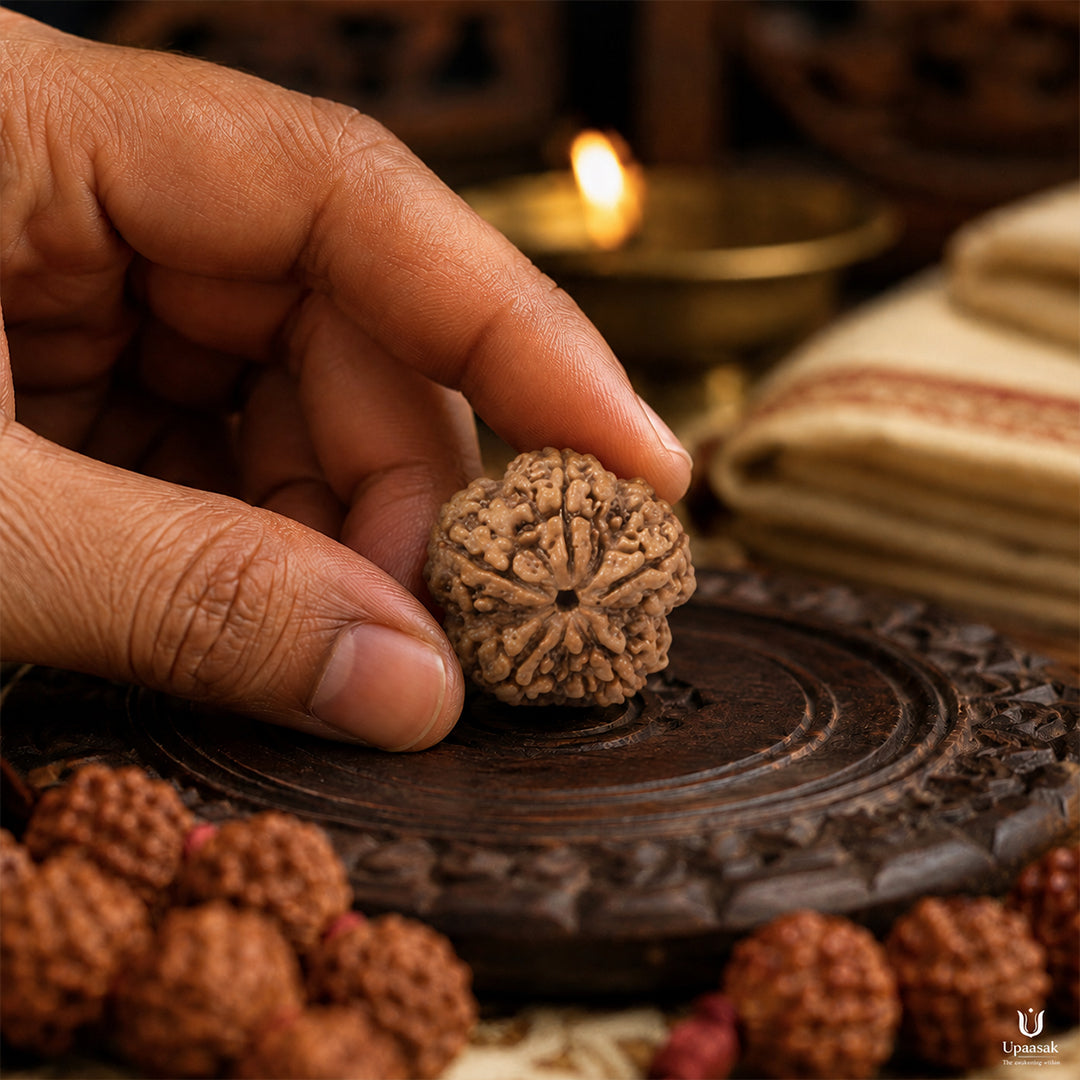
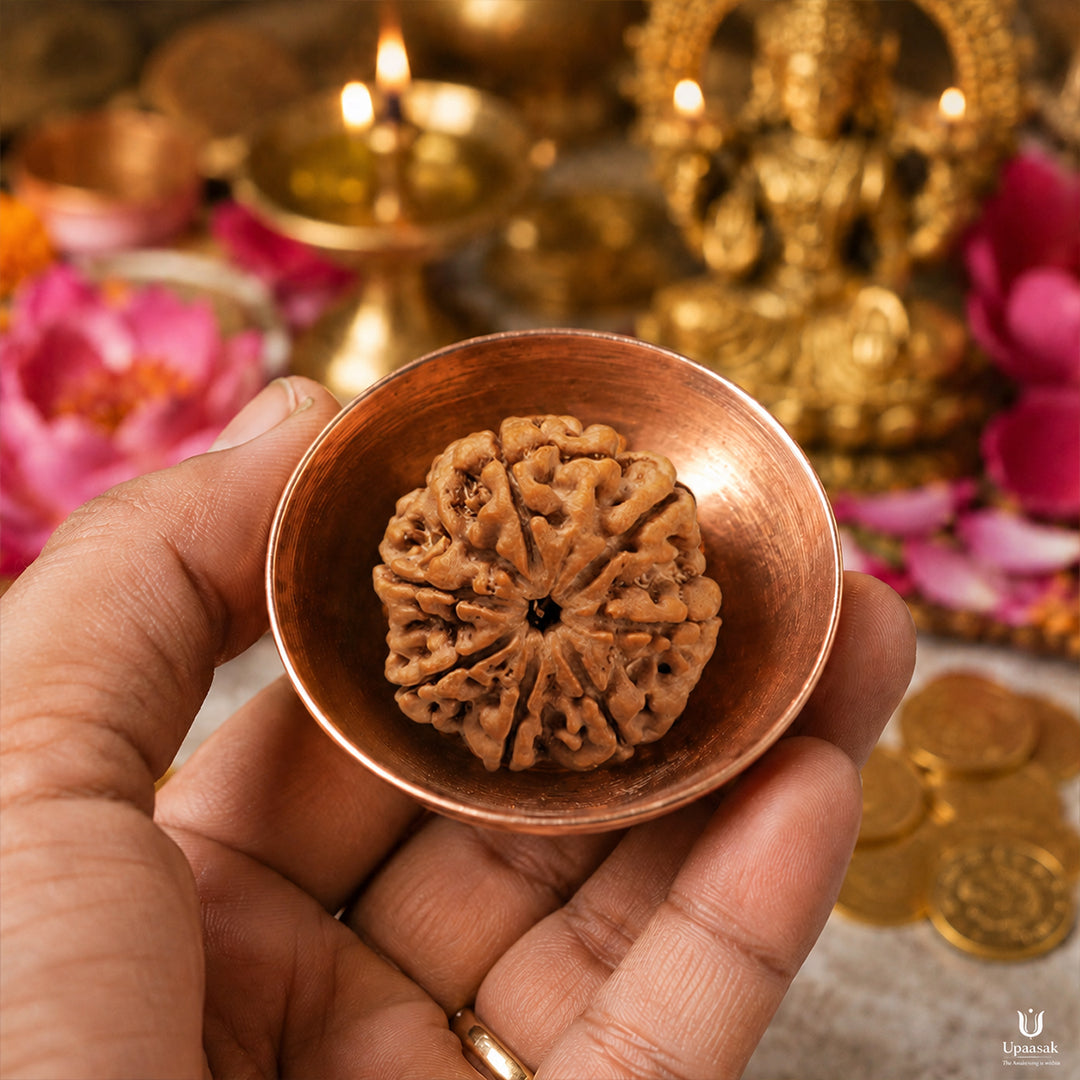
A genuine 5 Mukhi Rudraksha is a naturally grown seed from the Elaeocarpus ganitrus tree with five mukhis — natural grooves formed organically during the seed's development on the tree. These mukhis cannot be perfectly replicated through carving without leaving detectable signs — though increasingly sophisticated fakes require careful examination to identify.
A genuine bead has:
- Five naturally flowing mukhis from the stem end (top) to the base
- Natural surface texture with visible pores between mukhis
- Dense, heavy feel relative to its size
- Organic variation in shape — no two genuine beads are identical
- A naturally formed central hole (not machine-drilled smooth)
- Consistent brown colouring ranging from light to dark, depending on origin and age
Five Natural Mukhis
The five mukhis are the primary identifier of an original 5 Mukhi Rudraksha. Examine them carefully:
Signs of genuine natural mukhis:
- Each line flows continuously and naturally from the top to the base of the bead
- Lines show slight variation in depth, width, and spacing — not perfectly uniform
- The mukhis converge naturally at the top around the stem scar
- At the widest part of the bead, the five segments are clearly distinct
Signs of artificially carved mukhis:
- Lines appear unnaturally sharp, uniform, or too perfectly equal in spacing
- Lines do not flow naturally — they look incised rather than grown
- The bead's surface between mukhis appears worked or sanded
- All beads in a set look identical — natural Rudraksha always varies
Natural Texture & Structure
Run your fingertip slowly over the surface of the bead. A genuine original 5 Mukhi Rudraksha:
- Feels organically rough and textured — never smooth, glossy, or plastic-like
- Has small natural pores (brahmarandhra) visible on the surface between mukhis
- Shows natural weathering marks, slight colour variation, and organic imperfection
- Feels substantially heavier than a bead of the same apparent size made from hollow wood or resin
A smooth, uniform surface — especially on a suspiciously low-priced bead — is a strong indicator of an artificial or lacquered fake.
Lab Testing & Certification
The most reliable method for confirming an original 5 Mukhi Rudraksha is independent laboratory testing — specifically:
X-ray or CT scanning: A genuine 5 Mukhi Rudraksha has five internal seed compartments that correspond exactly to its five external mukhis. X-ray or CT imaging reveals these compartments conclusively. A fake bead shows no compartments, hollow interior, or irregular internal structure.
Third-party certification: A certificate from a reputable gemological laboratory or Rudraksha authentication body documents the mukhi count, confirms the mukhis are natural rather than carved, and verifies the geographic origin. This certificate is the most practical assurance for online buyers who cannot examine the bead physically before purchase.
Always request or verify certification documentation when purchasing from any seller — including high-priced or well-marketed ones.
Why Common Home Tests Can Mislead
Several home tests circulate widely for Rudraksha authenticity — and several are unreliable:
The water test (sink vs float): Not reliable. Dense fakes also sink. Small genuine beads may float if they contain natural air pockets. This test cannot confirm genuineness.
The copper coin test: Placing a Rudraksha between two copper coins and observing rotation — this has no scientific basis and is not a recognised authentication method.
The milk test: Observing colour change in milk — again, no reliable scientific basis. Organic matter of any kind can affect milk.
The only reliable tests are physical examination (mukhis, texture, weight, pores), X-ray imaging, and third-party certification. Do not rely on home tests as your primary authentication method.
Buying Authentic Rudraksha Online
When purchasing an original 5 Mukhi Rudraksha online:
- Verify that the listing names the specific origin (Nepal, India, Indonesia)
- Check for lab certification or third-party authentication documentation
- Look for detailed product photographs showing the mukhis clearly from multiple angles
- Read buyer reviews that mention bead quality, not just delivery satisfaction
- Assess the price — genuine Nepali 5 Mukhi beads have a production cost; very low pricing signals inauthenticity
- Confirm the seller's return and exchange policy
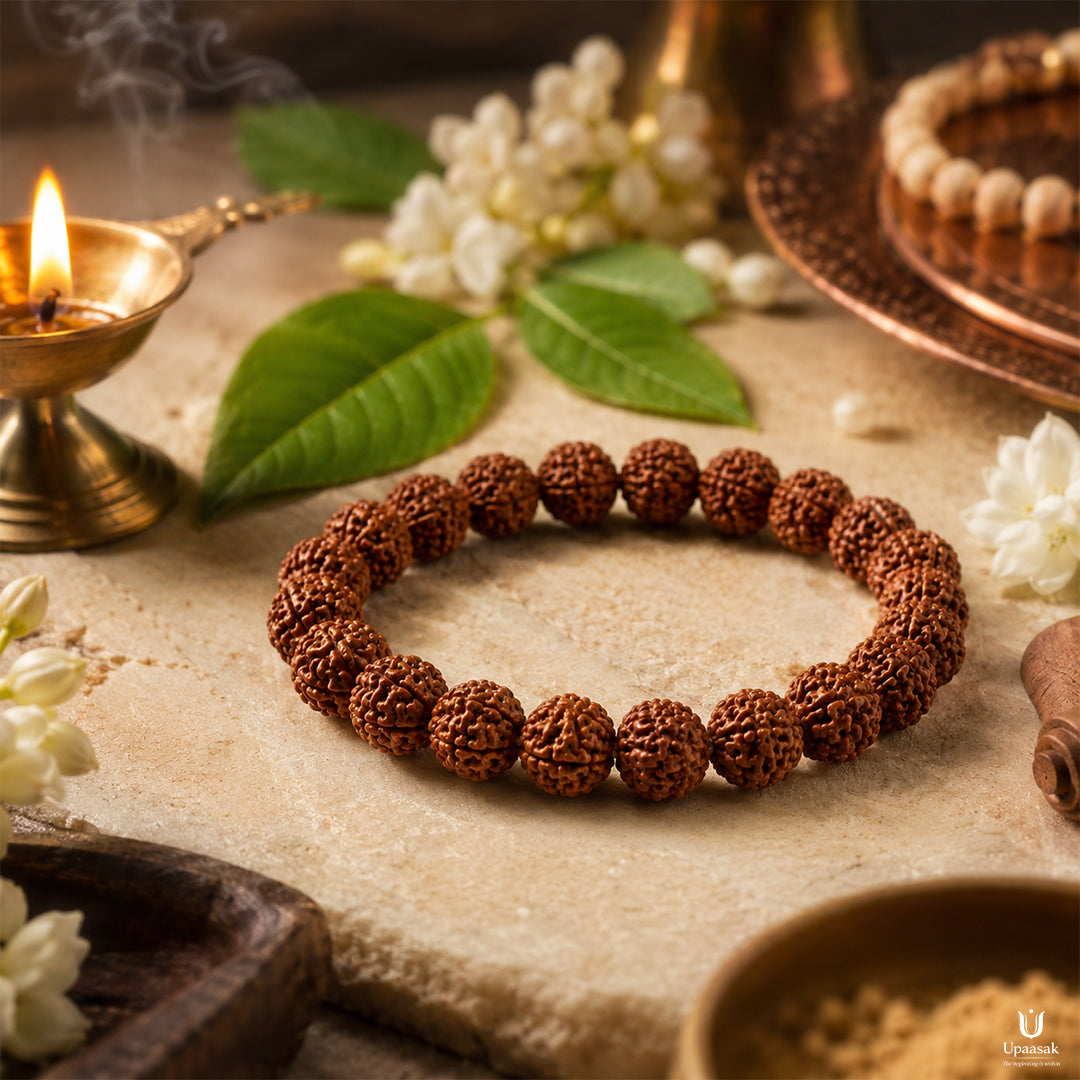
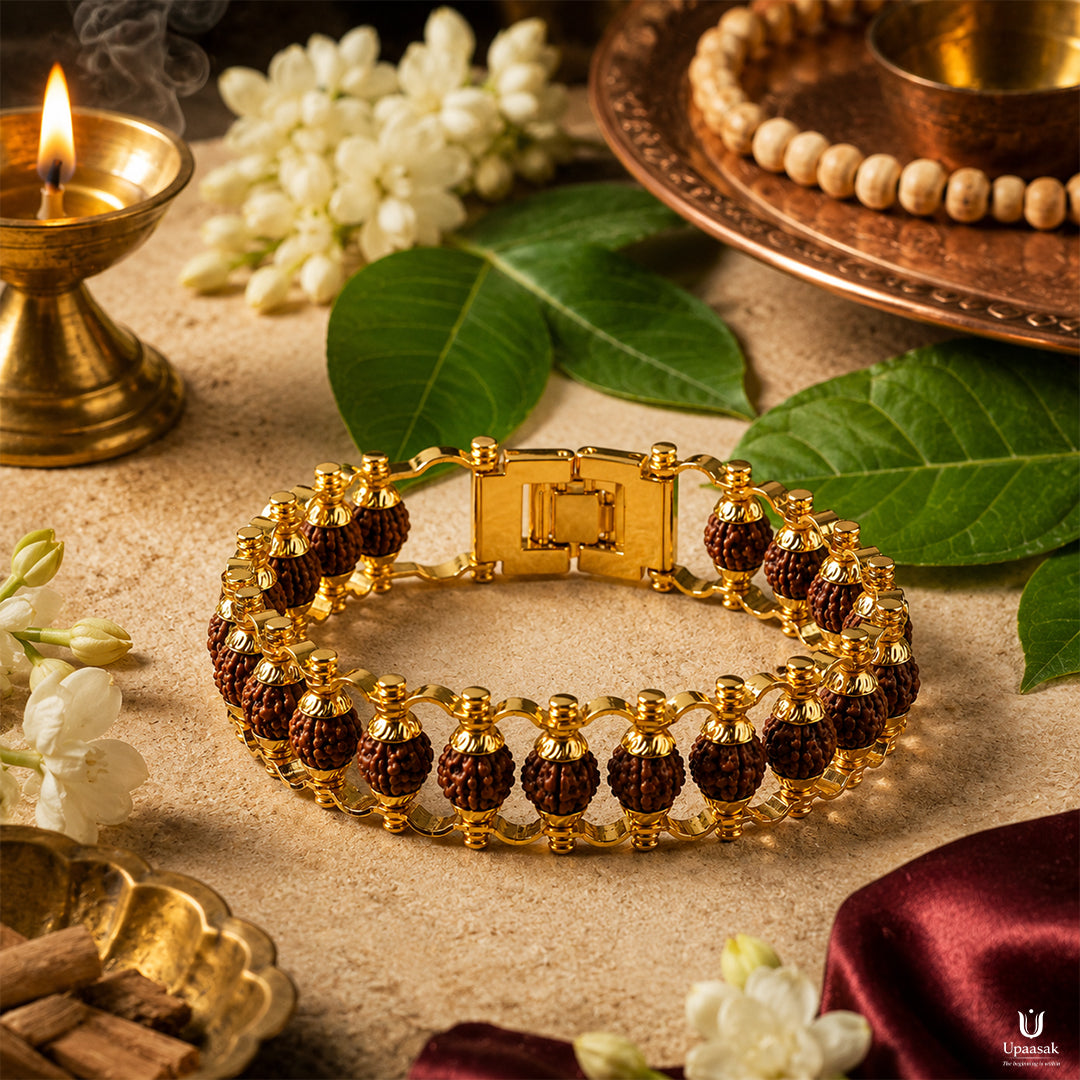
The natural 5 Mukhi Nepali Rudraksha from Upaasak is sourced from verified Nepali origin with documentation — addressing the core authenticity concerns directly. The 5 Mukhi Rudraksha bracelet uses the same authentic beads in a daily-wear format. Explore the full Rudraksha collection for all certified options.
FAQ
How do I know if my 5 Mukhi Rudraksha is real?
Examine the five mukhis for natural flow and organic variation, check for surface pores and natural texture, assess the bead's weight, and verify with a third-party lab certificate. X-ray testing is the most definitive method.
How can I check an original 5 Mukhi Rudraksha?
Look for naturally flowing, uncarved mukhis, organic surface texture with visible pores, appropriate weight for its size, and natural variation in shape. Certification from a reputable testing body confirms authenticity conclusively.
Is a water test enough to identify Rudraksha?
No — the water test is not a reliable authentication method. Dense fakes also sink, and small genuine beads may float. Never rely on the water test as your sole or primary authenticity check.