The market for Rudraksha in India contains a significant proportion of fake, carved, or low-quality beads sold as genuine. Knowing how to identify an original 7 Mukhi Rudraksha is essential — both for preserving the spiritual integrity of your practice and for ensuring you receive real value for your investment. This guide covers every reliable identification method and explains why some popular home tests are less reliable than many believe.
What Makes a 7 Mukhi Rudraksha Original?
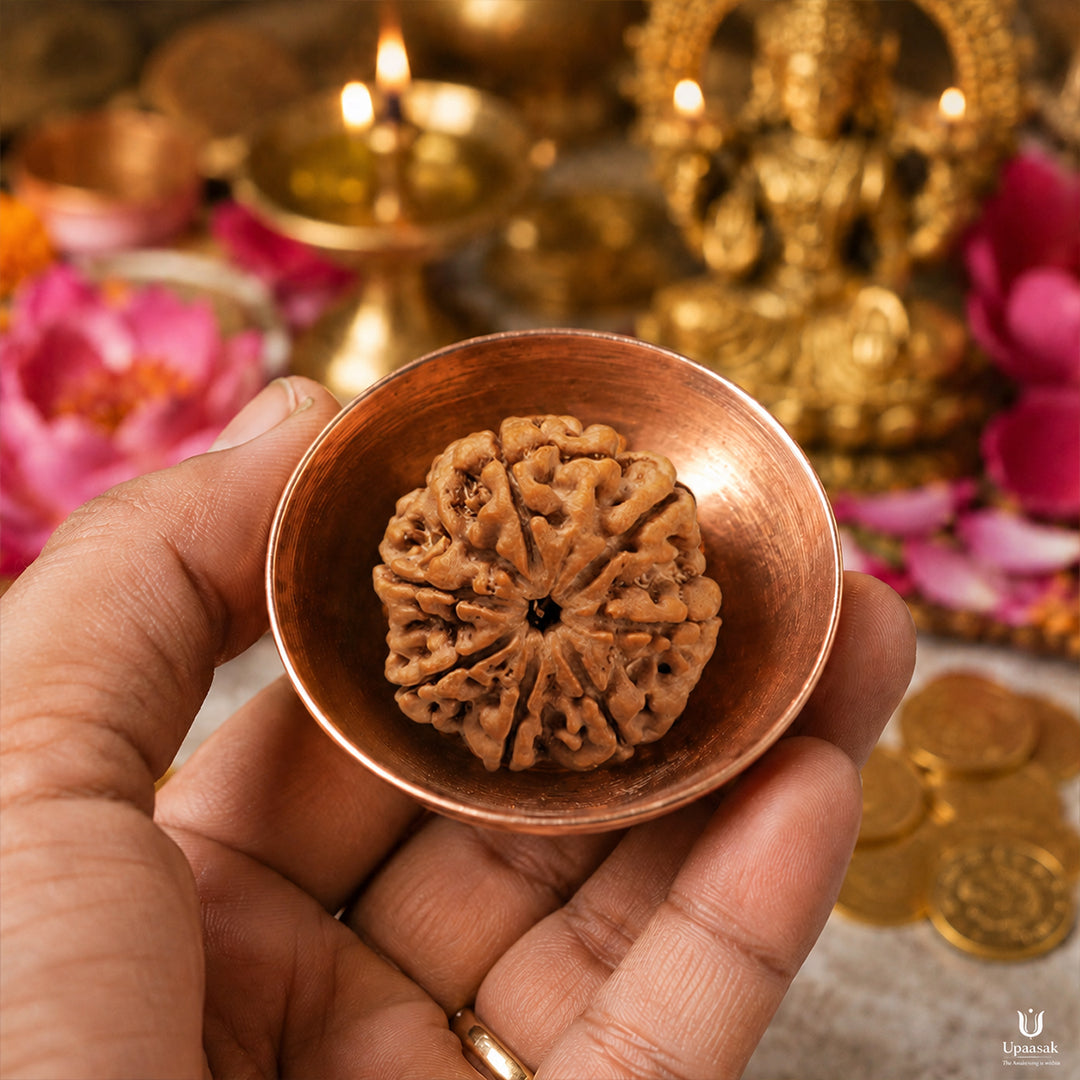
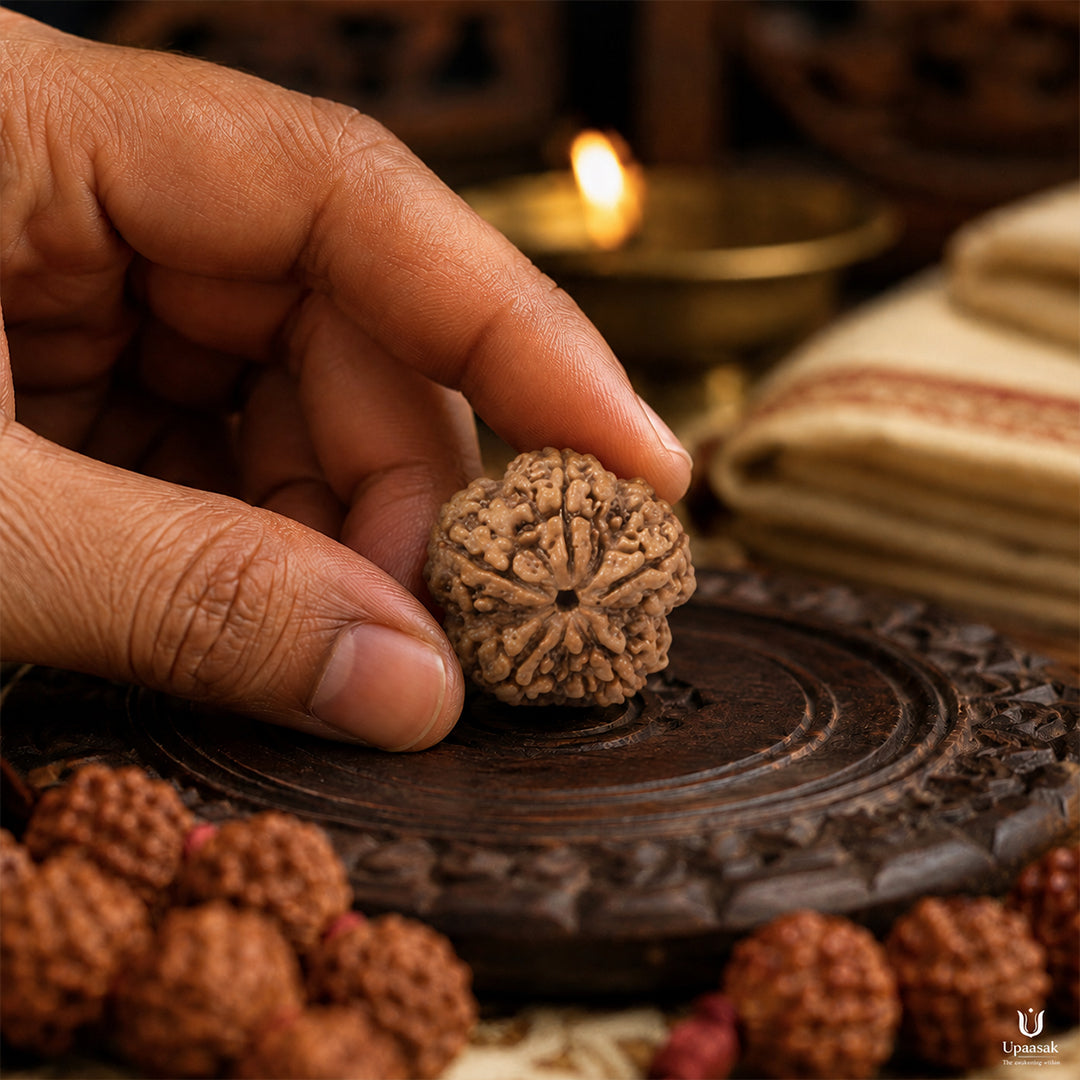
An original 7 Mukhi Rudraksha is a naturally grown bead from the Elaeocarpus ganitrus tree with seven naturally formed mukhis — unbroken lines running from the top to the base of the bead. These lines form during the bead's growth on the tree and cannot be perfectly replicated by carving without leaving detectable marks.
Key characteristics of a genuine bead:
- Seven distinct, naturally flowing mukhis from top to base
- Natural surface texture — slightly rough, with visible pores
- Irregular shape (no two genuine Rudraksha beads are identical)
- Dense, heavy feel relative to its size
- A naturally formed central hole (not drilled smooth like a bead factory hole)
Identifying Seven Natural Mukhis
The most important identifier is the mukhis themselves. On a genuine 7 Mukhi Rudraksha:
- Each of the seven lines should flow naturally and continuously from the top (stem end) to the bottom
- The lines should not look carved, uniform, or unnaturally sharp
- Natural mukhis show slight variation in depth and spacing — perfectly uniform lines suggest artificial carving
- At the top of the bead, the mukhis converge naturally around the stem scar
A fake or carved bead often has mukhis that are too clean, too uniform, too deep, or that do not flow naturally to the bead's base.
Nepal-Origin Characteristics
Nepali Rudraksha — the most prized origin — have distinct physical characteristics:
- Larger in size than Indian (Haridwar) origin beads
- More pronounced, well-defined mukhis
- Denser and heavier
- Natural brown colouring with visible surface texture
- The central hole (brahmarandhra) is naturally formed and slightly irregular
The natural 7 Mukhi Nepali Rudraksha from Upaasak is sourced directly from Nepal, with verified origin documentation.
Surface and Texture
Run your finger over the bead's surface. A genuine Rudraksha:
- Feels slightly rough and textured — never smooth like polished glass or plastic
- Has natural pores (small openings visible on the surface between mukhis)
- Shows organic variation in surface markings
- Has a naturally weathered appearance if it is older
A smooth, unnaturally uniform surface is a strong indicator of a fake or heavily lacquered bead.
Water Test: Limitations
The popular water test — in which a genuine Rudraksha supposedly sinks while a fake floats — is not a reliable authenticity test. A dense fake bead (carved wood, resin, or heavy plastic) will also sink. The density of the bead depends on its material and size, not solely its genuineness. Similarly, a very small genuine Rudraksha may float if it contains air pockets.
The water test should never be the sole basis for judging authenticity. It can indicate an obviously hollow or very light fake — but it cannot confirm a genuine bead.
X-Ray Testing
X-ray testing is the most scientifically reliable method for Rudraksha authentication. A genuine Rudraksha's internal seed structure shows a specific number of compartments equal to the number of mukhis — seven compartments for a 7 Mukhi. Fake beads show no compartments, hollow centres, or irregular internal structures.
Some reputable sellers and gemological labs offer X-ray or CT scan-based authentication services for high-value Rudraksha.
Lab Certification
A certificate from a reputable gemological laboratory or Rudraksha authentication body provides documented proof of:
- The number of natural mukhis
- The geographic origin of the bead (Nepal, India, Indonesia)
- That the mukhis are natural and not artificially carved
- Basic physical dimensions and weight
When buying an original 7 Mukhi Rudraksha online — where physical examination is impossible — certification is the most reliable proxy for authenticity. Always request or verify certification before purchasing.
Common Signs of Fake or Carved Beads
Watch for:
- Unnaturally uniform, sharp, or too-perfect mukhis
- Smooth surface texture without natural pores
- Extremely low price (genuine Nepali 7 Mukhi is never sold for ₹50–₹200)
- Seller unable to provide origin or certification information
- Beads that look identical to each other — natural Rudraksha always varies
Buying From a Reliable Seller
The most practical safeguard is purchasing from a seller with:
- Documented Nepali or verified origin sourcing
- Third-party lab certification
- Transparent product information including size, weight, and origin
- Detailed buyer reviews from verifiable customers
- A clear return policy
Explore the full Rudraksha collection for authentic, certified options across all mukhi varieties.
FAQ
How can I check if Rudraksha is real or not?
Examine the mukhis for natural flow and variation, check surface texture for natural pores, verify weight and density, and look for lab certification. X-ray testing is the most reliable method.
How do I identify an original 7 Mukhi Rudraksha?
Look for seven naturally flowing, uncarved mukhis from top to base, natural surface texture with visible pores, irregular shape, and dense weight. Certification from a reputable lab confirms authenticity conclusively.
Is the water test reliable?
No — the water test is not a reliable authentication method. Dense fake beads also sink. Do not rely on it as your primary or sole test for genuineness.
How can I check a Rudraksha's authenticity conclusively?
X-ray testing reveals the internal seed compartments equal to the mukhi count — the most definitive test. Third-party lab certification is the most practical method for buyers.
What does a Rudraksha certificate prove?
A reputable certificate confirms the number of natural mukhis, geographic origin, and that the mukhis are not artificially carved — providing documented assurance of authenticity.