The question of Rudraksha bracelet which hand is one of the most commonly asked — and one where different teachers, traditions, and texts offer slightly varying guidance. This article consolidates the primary traditional positions, explains the reasoning behind them, and helps you make an informed decision that aligns with your own practice and tradition.
Traditional Right-Wrist Practice
The right wrist is the predominant traditional recommendation for wearing a Rudraksha bracelet across most mainstream Hindu traditions and classical Rudraksha texts.
The reasoning comes from the Vedic understanding of the body's energy polarity:
- The right side of the body is associated with solar energy (Surya), active force, dharmic action, and positive outward projection
- In most Hindu ritual contexts, sacred objects are received, offered, and worn on the right side
- The right hand is the hand of giving, action, and auspicious interaction
Wearing the Rudraksha bracelet on the right wrist therefore aligns the bead with the body's active, outward-projecting energy — keeping its traditional protective and spiritual influence in the domain of daily action, work, and dharmic engagement.
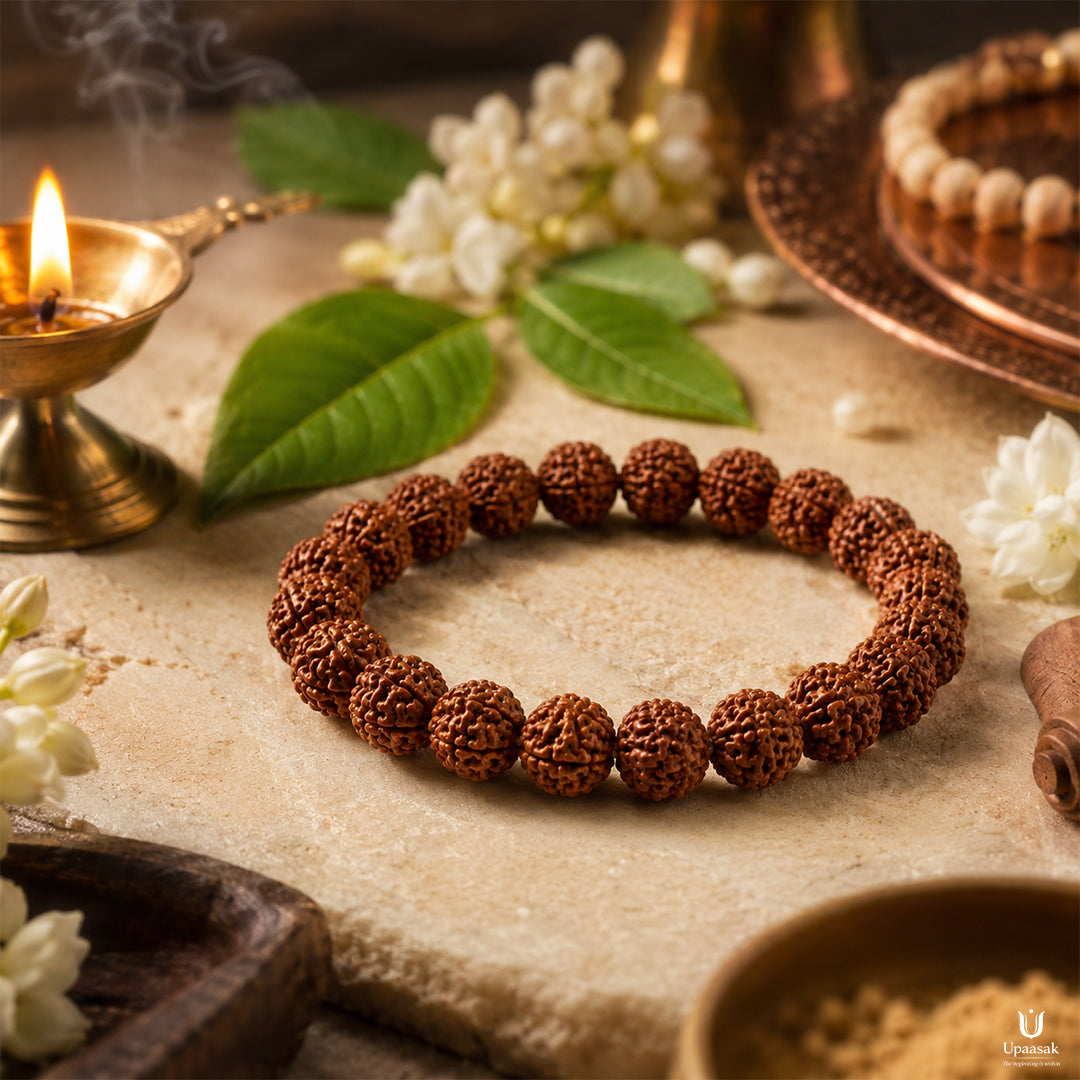
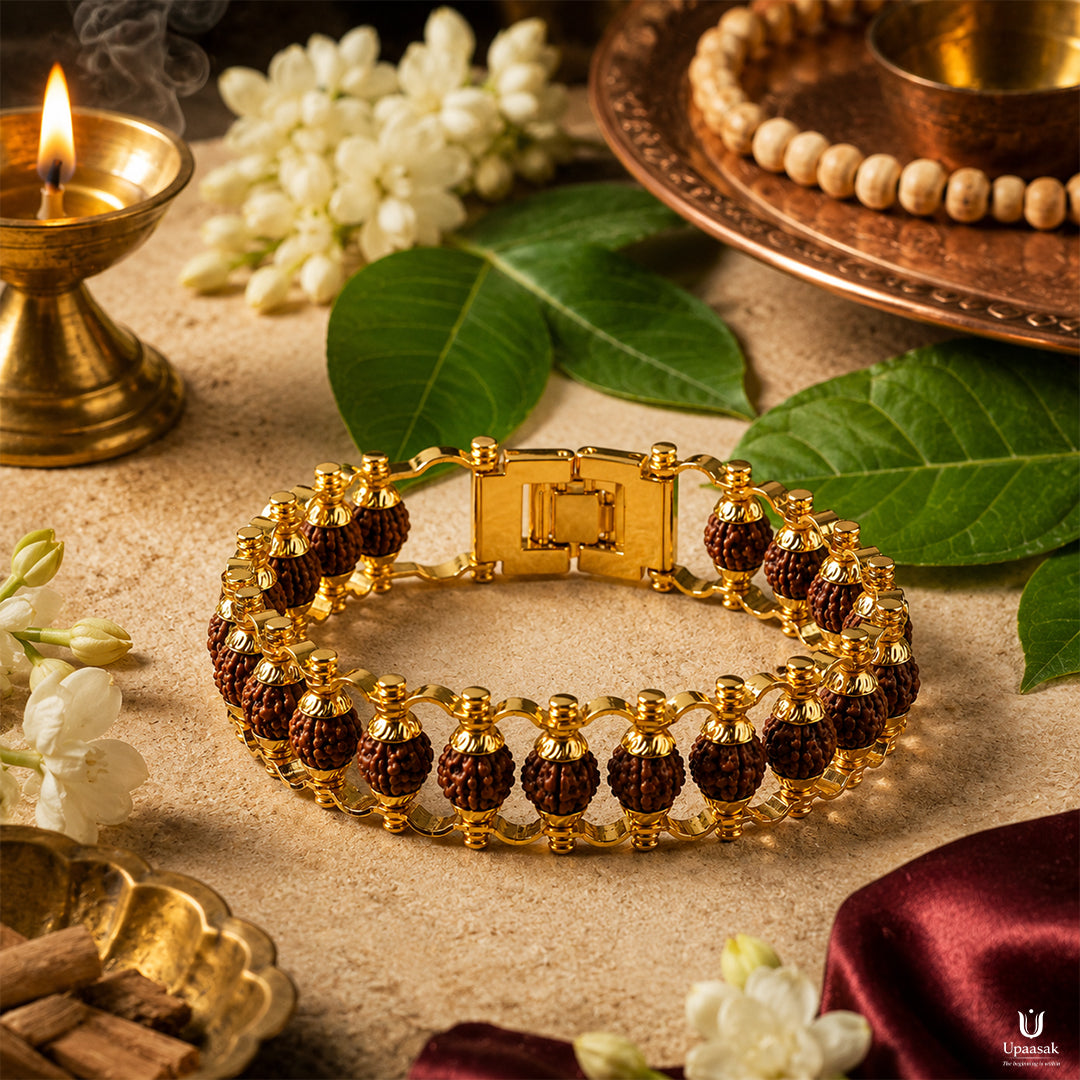
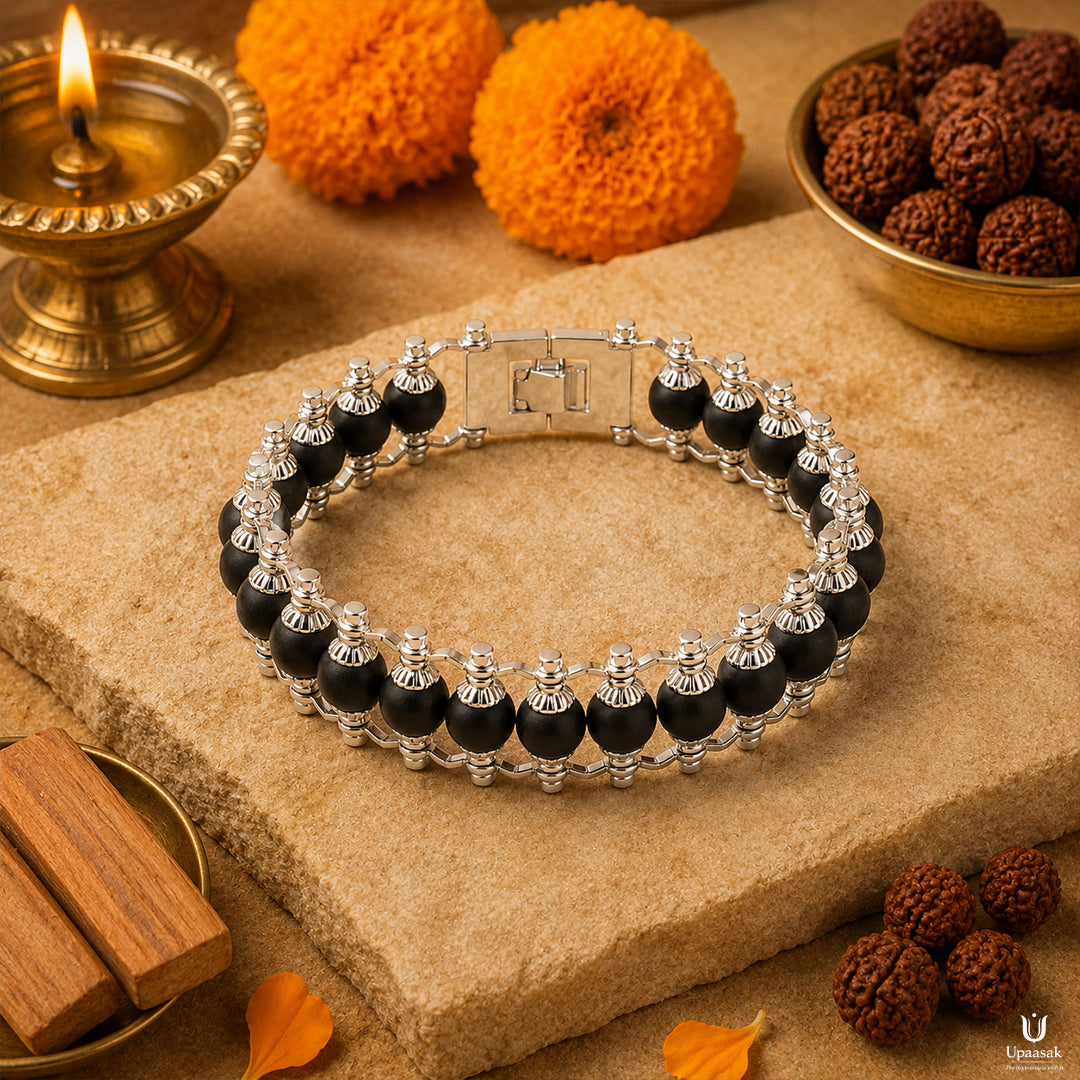
The 5 Mukhi Rudraksha bracelet for daily Shiva protection is designed for right-wrist daily wear, as is the gold plated 5 Mukhi Rudraksha bracelet for those who prefer a contemporary format.
Is Left-Wrist Wearing Allowed?
Yes — left-wrist Rudraksha bracelet wearing is practised and accepted in several traditions, particularly:
- Some tantric and Shakta traditions prescribe left-wrist wearing for specific purposes
- Certain teachers recommend the left wrist for receiving divine energy (following the same logic used in crystal healing traditions where the left is the receiving side)
- Personal comfort — for left-handed individuals or those who already wear a watch on the right wrist
The left wrist is not considered inauspicious or prohibited in most classical texts — the right-wrist recommendation is a preference rooted in tradition's energy polarity framework, not a strict prohibition against the left.
If your spiritual teacher or family tradition specifies one wrist, follow that guidance. In the absence of specific instruction, the right wrist is the safer traditional default.
Wrist vs Neck Wearing
| Form | Traditional Use | Skin Contact | Best For |
|---|---|---|---|
| Right wrist bracelet | Daily active-energy wearing | Continuous | Work, study, daily life |
| Left wrist bracelet | Receiving-energy practice (some traditions) | Continuous | Meditation, specific intentions |
| Neck pendant | Close to heart/Anahata chakra | Continuous | Devotional, traditional, formal |
| Mala (108 beads) | Japa, meditation | During practice | Sustained mantra chanting |
All forms provide skin contact — the key requirement across all traditions. The wrist position determines which traditional energy framework the wearing aligns with, not whether the practice is valid.
Practical Daily-Wear Considerations
Beyond tradition, practical considerations also matter for Rudraksha bracelet which hand:
- Watch placement: If you wear a watch on the left wrist (most common), wearing the Rudraksha bracelet on the right keeps both comfortable and avoids friction between beads and watch
- Dominant hand: Some people find constant bracelet wear on the dominant (right) hand slightly restrictive during detailed work — the left wrist may be more comfortable
- Stacking: If you wear other spiritual bracelets (crystal, copper, or thread bracelets), distributing them across both wrists is practical
These are practical considerations, not spiritual ones. Prioritise tradition's guidance first; adjust for comfort within that framework.
Why Traditions Differ
Different schools of Hindu practice have developed distinct guidelines based on their particular understanding of body energy, deity associations, and ritual logic. The right-wrist preference is dominant across Shaiva, Vaishnava, and mainstream devotional traditions. Some Shakta and tantric traditions have different prescriptions based on their specific ritual systems.
This variation is not a contradiction — it reflects the diversity within Sanatan Dharma's living tradition. The most important principle across all positions is the same: wear with sincere intention, maintain skin contact, and keep the practice consistent.
For Men and Women
Traditional Rudraksha texts carry no gender-based distinction for wrist wearing. Both men and women wear Rudraksha bracelets on the right wrist in most traditions.
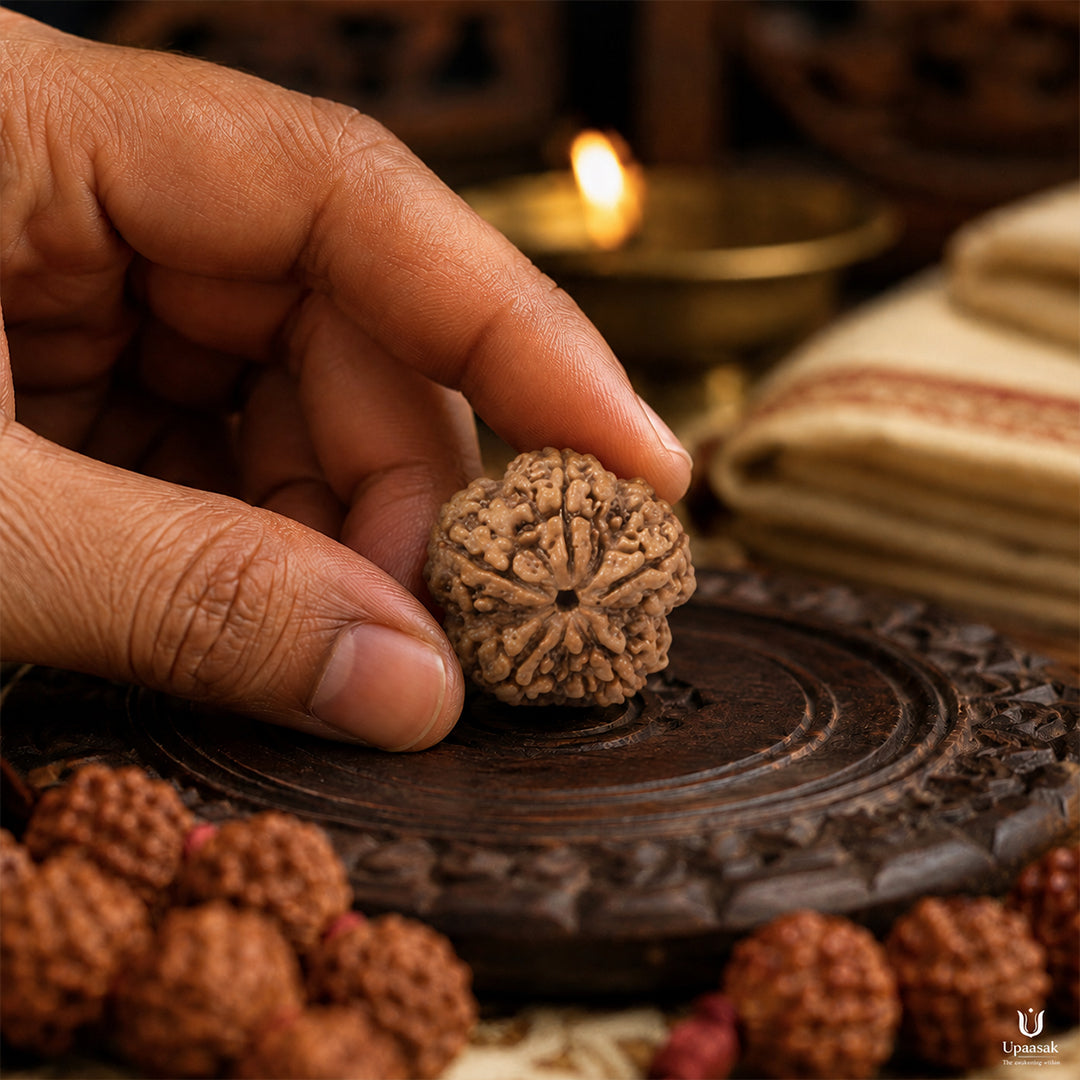
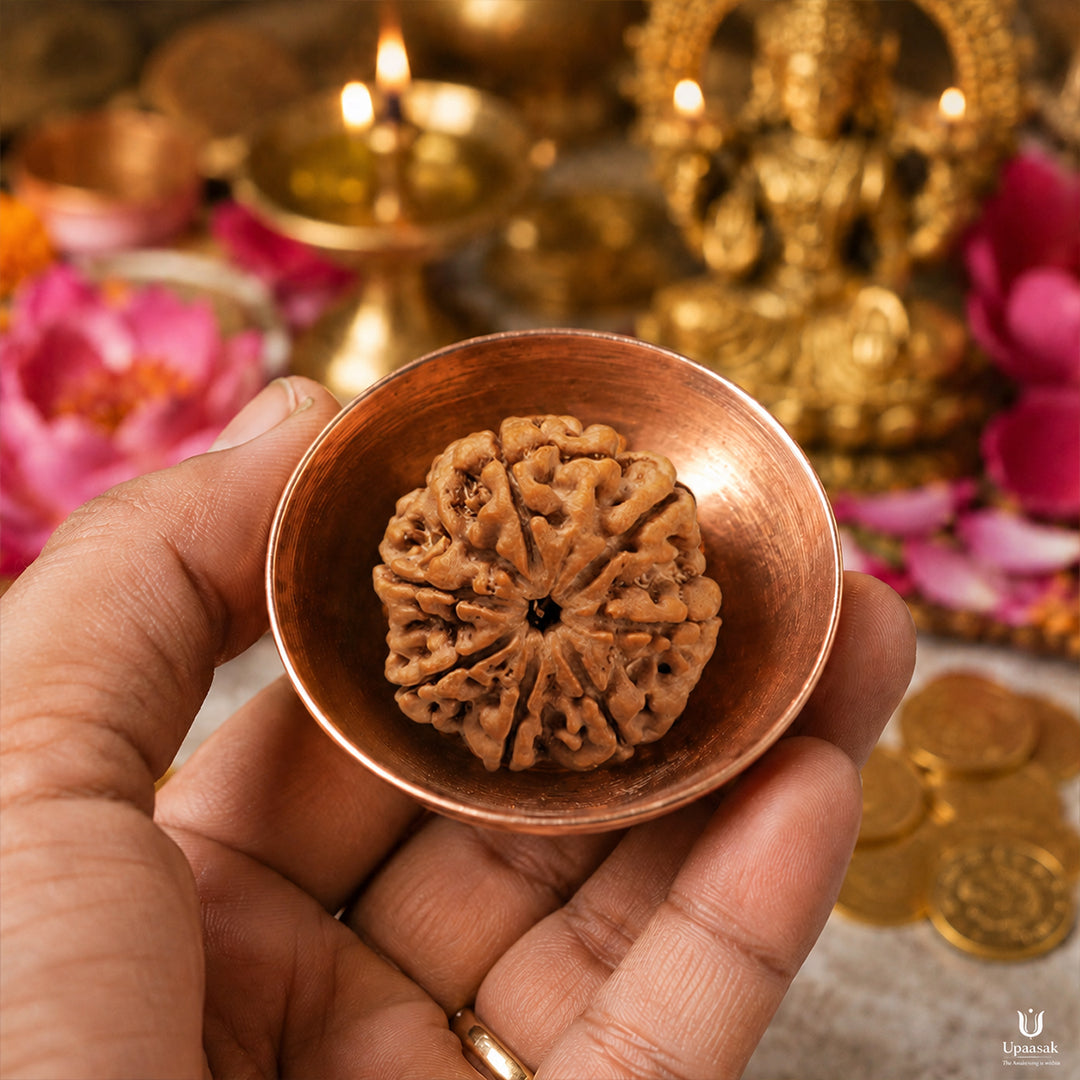
Some traditional practitioners advise menstruating women to remove Rudraksha temporarily — this is a traditional guideline observed in some communities, not a universal rule. Follow your own tradition's practice if this is relevant for you. Explore the complete Rudraksha collection and the natural 5 Mukhi Nepali Rudraksha for loose bead options if you prefer to create your own wearing format.
FAQ
Which hand should I wear a Rudraksha bracelet on?
The right wrist is the most widely recommended position across mainstream Hindu traditions — associated with active, positive, dharmic energy. Left-wrist wearing is accepted in some traditions. Follow your spiritual teacher's guidance if available.
Is Rudraksha better on the right or left hand?
The right hand is traditionally preferred for most purposes. The right side is associated with solar, active, positive energy in Vedic practice — making it the natural alignment for a bead intended to support active daily life and dharmic engagement.
Can ladies wear Rudraksha bracelets?
Yes — there are no gender-based restrictions on wearing Rudraksha bracelets. Women wear them on the right or left wrist depending on their tradition. Some communities observe traditional guidelines around menstruation — follow your own tradition's practice if relevant.