Finding an original Rudraksha bracelet in India requires more than locating a listing that says "genuine" or "authentic." The market — both online and offline — contains a significant volume of imitation beads, chemically treated seeds, and low-grade material presented as premium Rudraksha. This guide tells you what an original Rudraksha bracelet actually means, what to look for in the bead itself, and what questions to ask any seller before purchasing.
What Does "Original Rudraksha" Mean?
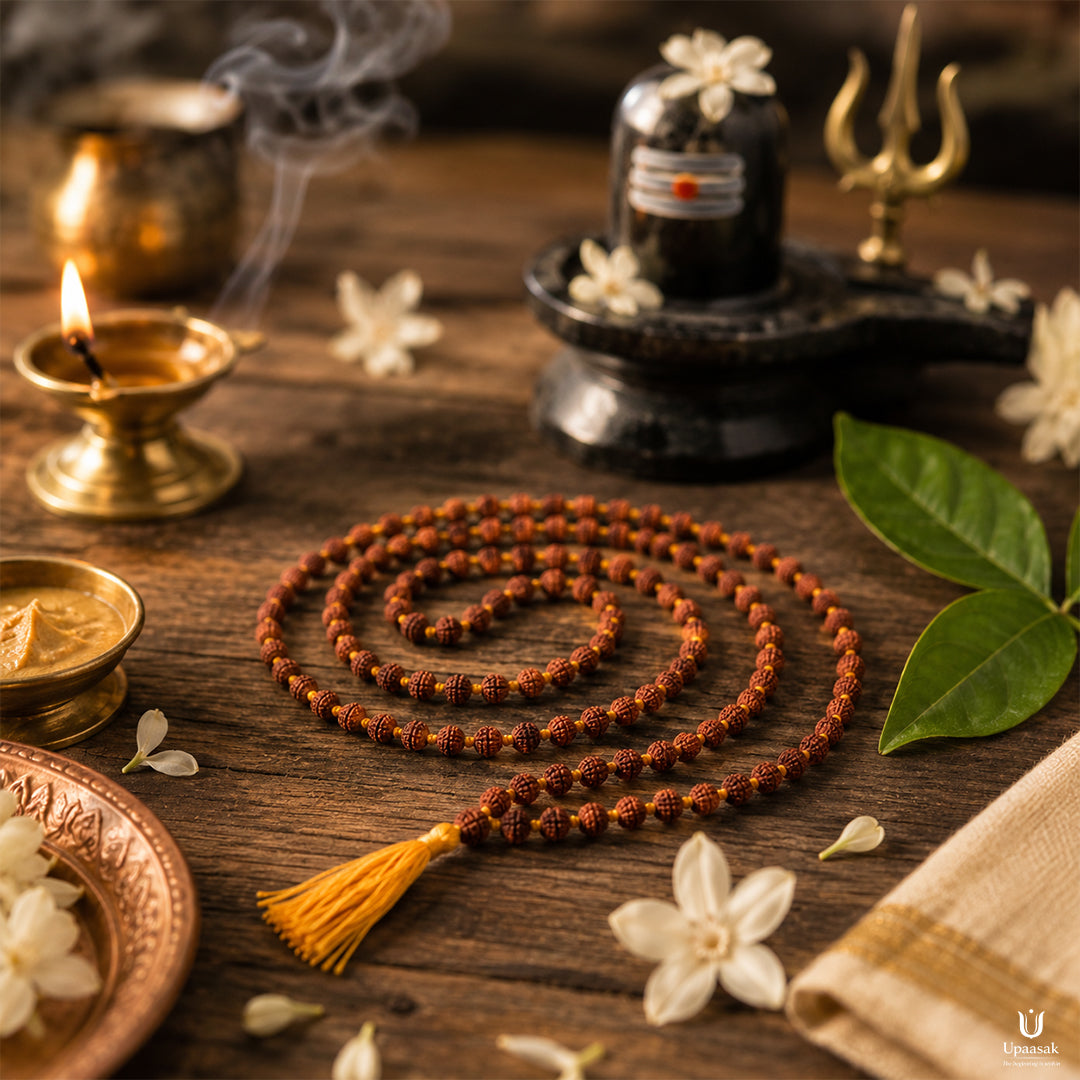
An original Rudraksha bracelet uses genuine seeds from the Elaeocarpus ganitrus tree — a species that grows primarily in the Himalayan belt of Nepal, along with parts of Indonesia and India. The seed forms naturally with a specific number of lines (mukhis) running from the top to the base — and these mukhis cannot be perfectly replicated through carving without leaving detectable signs.
"Original" means:
- Naturally grown seed, not chemically synthesised
- Naturally formed mukhis — not artificially carved onto a plain seed
- Unaltered surface — not lacquered, painted, or heavily chemically treated to disguise lower quality
Natural vs Imitation Rudraksha
The most common imitations in the Indian market:
| Type | Description | How to Spot |
|---|---|---|
| Carved wood | Wood seeds carved with lines to mimic mukhis | Lightweight, too uniform, lines too sharp |
| Plastic/resin | Moulded to look like Rudraksha | Uniform weight, no natural pores |
| Chemically treated genuine beads | Real Rudraksha lacquered or dyed | Unnatural shine, no visible surface texture |
| Wrong-mukhi genuine beads | Lower mukhi count, altered to appear higher | X-ray test confirms compartment count |
The most important principle: no two original Rudraksha beads are identical. Natural seeds always show organic variation in size, surface texture, and mukhi spacing.
How to Check Rudraksha Beads
When examining any bead for an original Rudraksha bracelet, check:
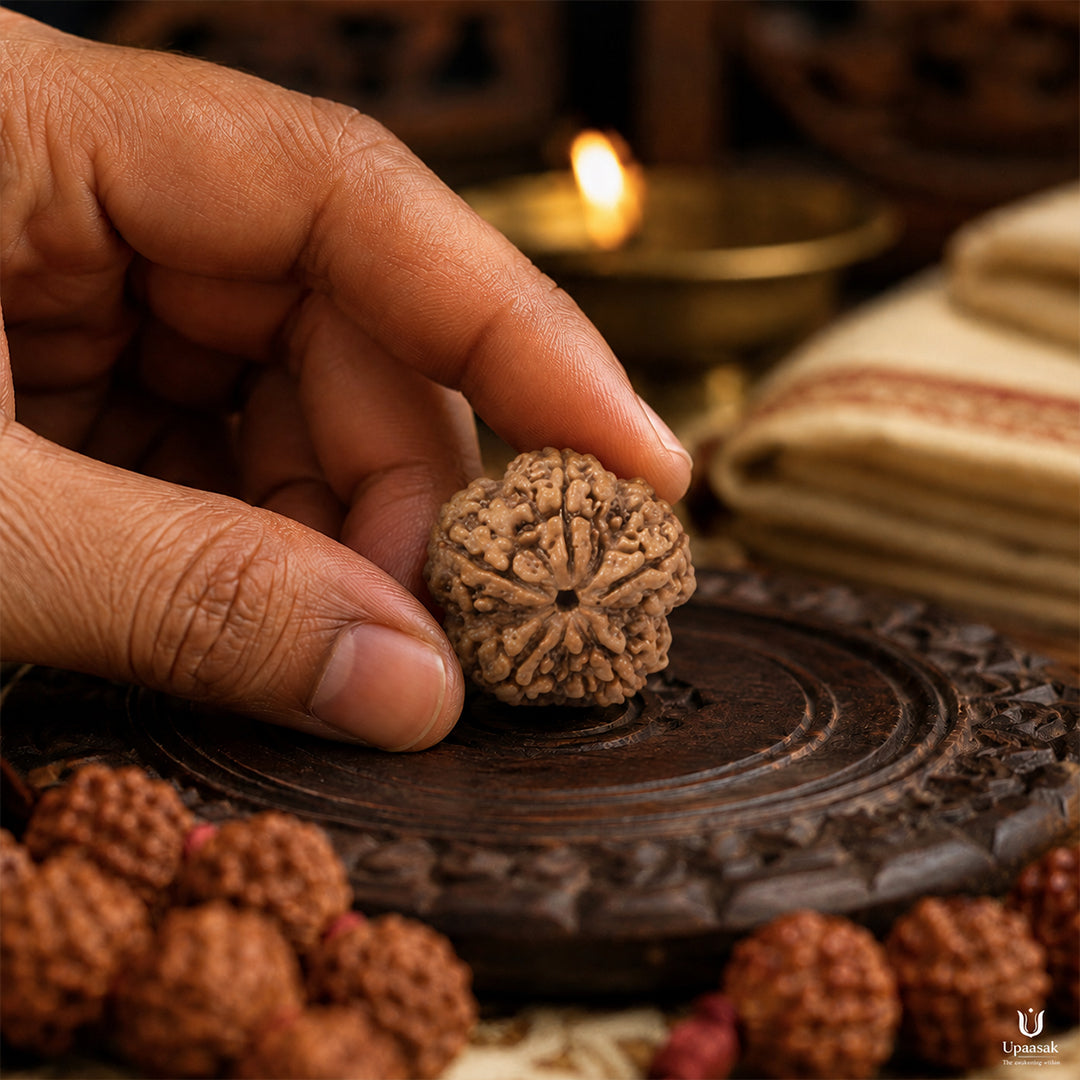
Surface texture: Genuine Rudraksha has a rough, natural surface with visible pores between mukhis. A smooth, glossy, or overly uniform surface indicates treatment or imitation.
Mukhi lines: Natural mukhis flow continuously from the top (stem scar) to the base of the bead, with slight variation in depth and spacing. Artificially carved lines tend to be unnaturally sharp, evenly spaced, and too clean.
Weight: Genuine Rudraksha is denser than most imitations. A bead that feels suspiciously light for its size warrants closer inspection.
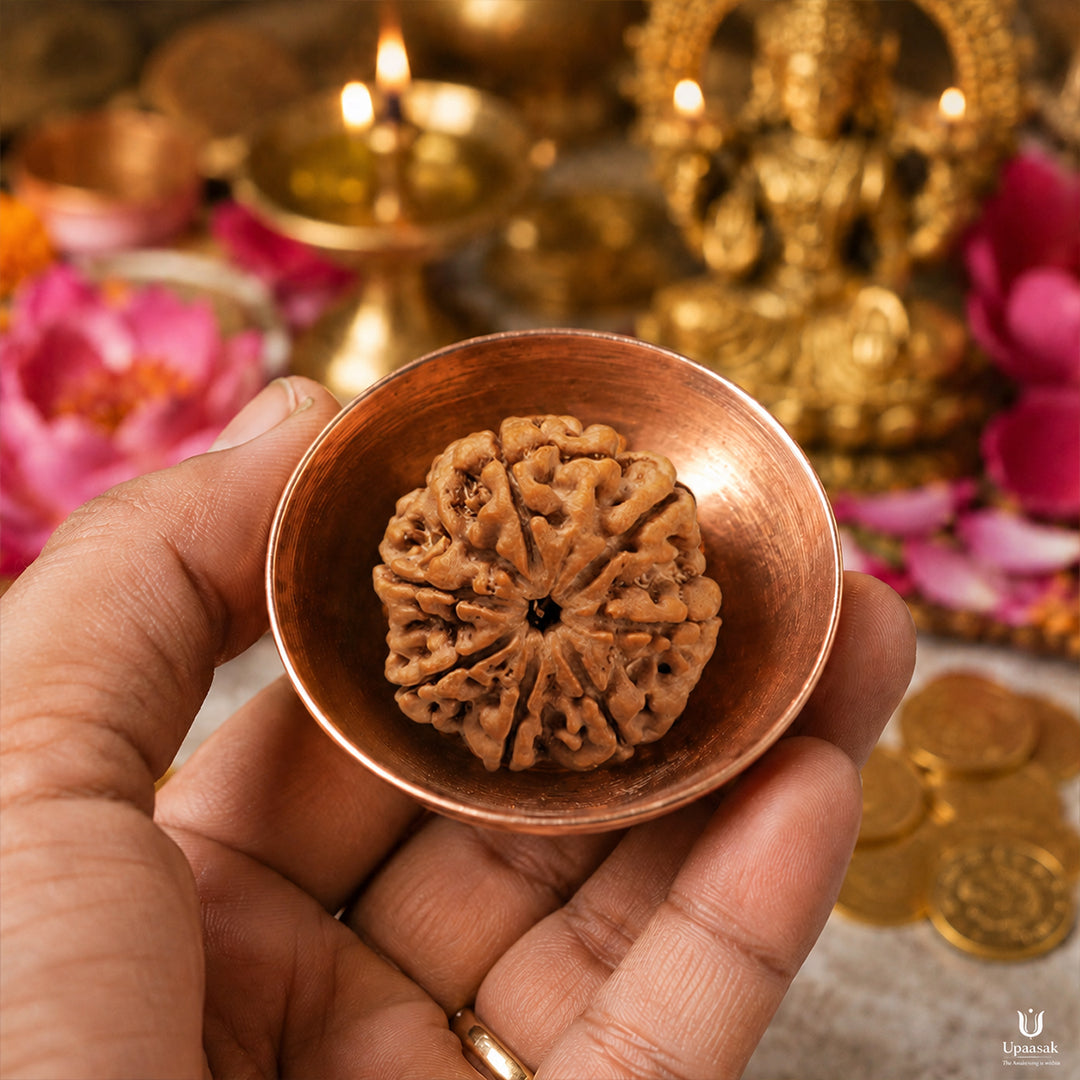
Central hole: The brahmarandhra (central hole) in a natural Rudraksha is organically formed and slightly irregular. Machine-drilled smooth holes are more typical of imitation or heavily processed beads.
Understanding Mukhi
Mukhi refers to the natural faces or segments of a Rudraksha bead — the lines that run from top to base. Each bead's mukhi count is determined during its growth on the tree.
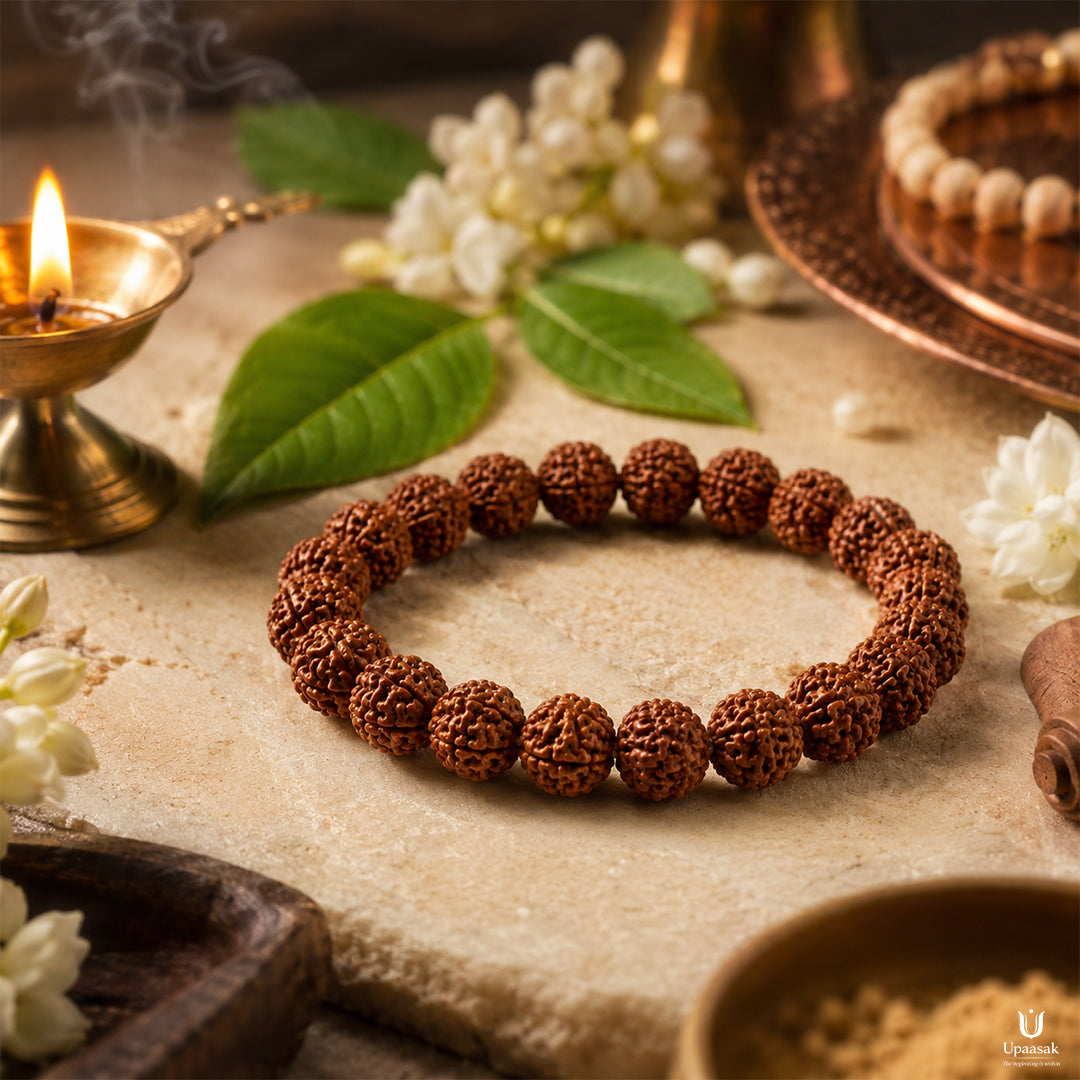
- The most common bracelet bead is 5 Mukhi — universally suitable, Jupiter-ruled, no restrictions by rashi or gender
- 7 Mukhi is associated with Goddess Mahalakshmi and Saturn — worn for wealth and karmic alignment
- Mukhi count must match the number of internal seed compartments — verifiable only through X-ray testing
The natural 5 Mukhi Nepali Rudraksha and natural 7 Mukhi Nepali Rudraksha from Upaasak are sourced from verified Nepali origin — the most respected source for Rudraksha quality globally.
Certification & Testing
Lab certification is the clearest assurance of an original Rudraksha bracelet when buying online. A genuine certificate from a recognised testing body confirms:
- The mukhi count is natural and matches the internal seed compartments
- The mukhis are not artificially carved
- The geographic origin of the bead
X-ray or CT scanning is the most reliable scientific test — it reveals the number of internal compartments, which must equal the external mukhi count. No imitation passes this test.
What to Ask a Seller
Before purchasing any original Rudraksha bracelet, ask:
- Is the Rudraksha natural and untreated?
- What is the mukhi count and origin?
- Do you provide a certificate or third-party testing documentation?
- What is your return policy if the bead does not match the description?
- Are the beads Nepali or Indonesian origin?
A seller who answers all five questions clearly and directly is far more trustworthy than one who deflects to marketing language.
Buying Online vs Offline
Both channels carry risks — the key is seller transparency, not the channel itself:
Online: Check product descriptions for specific mineral/seed identification, actual product photography showing natural variation, stated bead size (mm), and a verifiable return policy.
Offline: Examine the bead directly — surface texture, weight, mukhi clarity. Ask for documentation. Physical examination gives you more information but does not guarantee authenticity without testing.
Original Rudraksha Buying Checklist
Before completing any purchase:
- Rudraksha specifically identified — not "spiritual bead" or "healing stone"
- Natural and untreated status disclosed
- Mukhi count stated
- Origin (Nepal or Indonesia) disclosed
- Actual product photos showing bead variation
- Certification available or explicitly addressed
- Bead size in mm stated
- Clear return policy confirmed
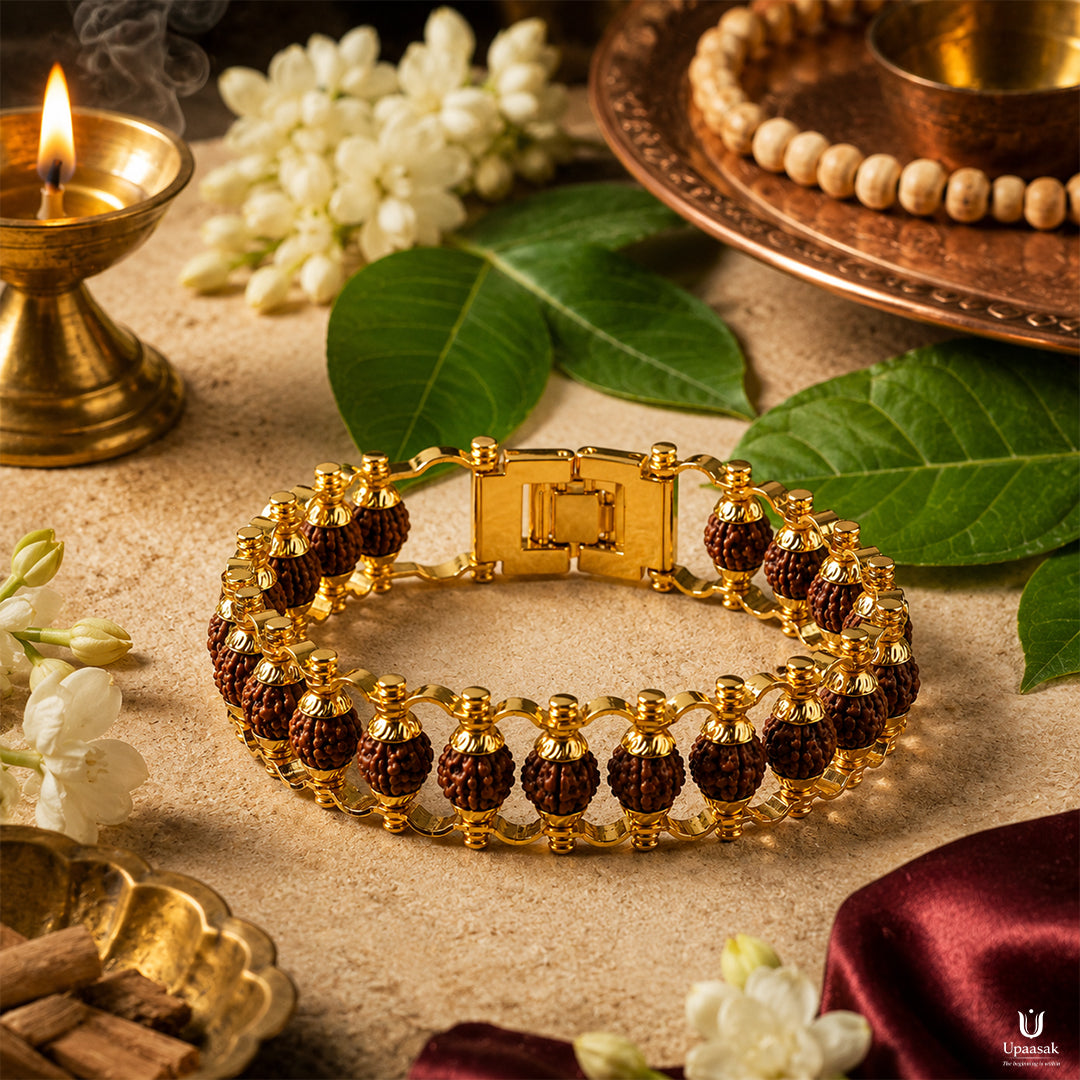
The Rudraksha bracelet for daily Shiva protection and gold plated Rudraksha bracelet from Upaasak provide specific product information including bead origin and natural seed composition. The full Rudraksha collection covers loose beads, bracelets, and malas with consistent sourcing standards.
FAQ
Where can I buy an original Rudraksha bracelet?
Look for specialist spiritual brands that identify their beads by mukhi count and origin, disclose treatment status, provide actual product photography, and offer a clear return policy. Avoid listings with vague descriptions like "genuine spiritual bracelet" without specifics.
How do I find original Rudraksha?
Check mukhi lines for natural organic flow, verify surface texture has visible pores, assess bead weight, and request certification or X-ray test documentation from the seller.
How can I verify Rudraksha authenticity?
X-ray or CT scanning is the most reliable method — it confirms internal compartments match the external mukhi count. Third-party lab certification provides the next most reliable assurance for online buyers.
Where can I find an original Rudraksha hand bracelet?
Specialist spiritual jewellery brands with transparent sourcing, verified Nepali or Indonesian origin documentation, and responsive customer support are the most reliable source — more so than generic marketplace listings without product specifics.