The question of which Rudraksha suits which Rashi is one of the most searched in the Indian spiritual jewellery space — and one where traditional Vedic astrology, personal devotion, and practical wearing all intersect. This Rudraksha Rashi zodiac guide explains how Vedic tradition connects Mukhi types to planetary rulers, which rashis benefit most from specific beads, and when individual astrological consultation adds real value beyond general guidelines.
What Is Rashi-Based Rudraksha Selection?
Rashi-based Rudraksha selection is the practice of choosing a Mukhi type based on your Vedic moon sign (Rashi) — the zodiac sign in which the Moon was placed at the time of your birth. In Jyotish (Vedic astrology), each Rashi is ruled by a planet, and each Rudraksha Mukhi is also associated with a ruling planet. The logic follows that wearing the Rudraksha whose ruling planet matches or strengthens your Rashi's planetary needs creates astrological alignment.
This is a traditional astrological belief system — not a scientifically verified framework. Its value lies within the Vedic astrology tradition itself, which has been practised and refined for thousands of years across India.
Rudraksha & Zodiac Traditions
The Rudraksha-planet-Rashi connection in Vedic tradition works as follows:
- Each Mukhi Rudraksha is governed by a specific planet
- Each Rashi is ruled by a specific planet
- Wearing the Rudraksha governed by your Rashi's ruling planet strengthens that planet's positive qualities in your chart
- Alternatively, wearing the Rudraksha of a planet causing difficulty in your chart is believed to pacify its malefic effects
This dual logic — strengthening benefic planets and pacifying malefic ones — is why Rashi-based recommendations can sometimes appear contradictory between different astrologers or texts.
Common Rashi & Rudraksha Associations
The following table represents the most widely cited traditional associations across Vedic texts and practitioner recommendations. Individual astrologers may vary these based on the full birth chart:
| Rashi | English Name | Ruling Planet | Traditionally Recommended Mukhi | Secondary Option |
|---|---|---|---|---|
| Mesh | Aries | Mars (Mangal) | 3 Mukhi | 5 Mukhi |
| Vrishabha | Taurus | Venus (Shukra) | 6 Mukhi | 5 Mukhi |
| Mithun | Gemini | Mercury (Budh) | 4 Mukhi | 5 Mukhi |
| Kark | Cancer | Moon (Chandra) | 2 Mukhi | 5 Mukhi |
| Simha | Leo | Sun (Surya) | 1 Mukhi | 5 Mukhi |
| Kanya | Virgo | Mercury (Budh) | 4 Mukhi | 5 Mukhi |
| Tula | Libra | Venus (Shukra) | 6 Mukhi | 5 Mukhi |
| Vrishchika | Scorpio | Mars (Mangal) | 3 Mukhi | 5 Mukhi |
| Dhanu | Sagittarius | Jupiter (Guru) | 5 Mukhi | 7 Mukhi |
| Makar | Capricorn | Saturn (Shani) | 7 Mukhi | 5 Mukhi |
| Kumbha | Aquarius | Saturn (Shani) | 7 Mukhi | 5 Mukhi |
| Meena | Pisces | Jupiter (Guru) | 5 Mukhi | 6 Mukhi |
Important note: This table represents general traditional associations, not definitive prescriptions. Individual birth charts contain many planetary placements beyond Rashi alone — a full astrological assessment considers all of these.
Mukhi & Traditional Associations
Understanding the planetary association of each Mukhi helps you evaluate Rashi-based recommendations more clearly:
| Mukhi | Ruling Planet | Primary Traditional Association |
|---|---|---|
| 1 Mukhi | Sun (Surya) | Divine consciousness, leadership, authority |
| 2 Mukhi | Moon (Chandra) | Emotional harmony, relationships, inner peace |
| 3 Mukhi | Mars (Mangal) | Confidence, energy, removal of past karma |
| 4 Mukhi | Mercury (Budh) | Knowledge, communication, creative intelligence |
| 5 Mukhi | Jupiter (Guru) | Wisdom, peace, universal suitability |
| 6 Mukhi | Venus (Shukra) | Confidence, creativity, relationships |
| 7 Mukhi | Saturn (Shani) | Wealth, karmic discipline, Saturn pacification |
| 8 Mukhi | Rahu | Obstacle removal, new beginnings |
| 9 Mukhi | Ketu | Spiritual liberation, fearlessness |
Should Rashi Decide Your Choice?
Not necessarily — and here is why:
The 5 Mukhi Rudraksha remains the most universally appropriate bracelet bead regardless of Rashi. Traditional texts describe it as suitable for all rashis without exception — because Jupiter (its ruling planet) is considered universally benefic and its Shiva association transcends planetary specificity.
Rashi-based selection becomes most relevant when:
- You are wearing Rudraksha specifically as a Vedic astrological remedy
- You are experiencing the Mahadasha or Antardasha of a specific planet
- A qualified astrologer has assessed your birth chart and recommended a specific Mukhi
- You want to combine multiple Mukhi types in a single bracelet for multi-planetary alignment
For general devotional wearing — spiritual practice, daily intention, Lord Shiva's blessings — the 5 Mukhi is the sound default choice for any Rashi.
Choosing a Bracelet Based on Rashi
Practical framework:
- Beginning a Rudraksha practice with no astrological guidance: 5 Mukhi — universally appropriate, no restrictions
- Saturn-ruled rashis (Makar, Kumbha) or during Sade Sati: 7 Mukhi — addresses Saturn's energy directly. The natural 7 Mukhi Nepali Rudraksha is the standard choice for this purpose
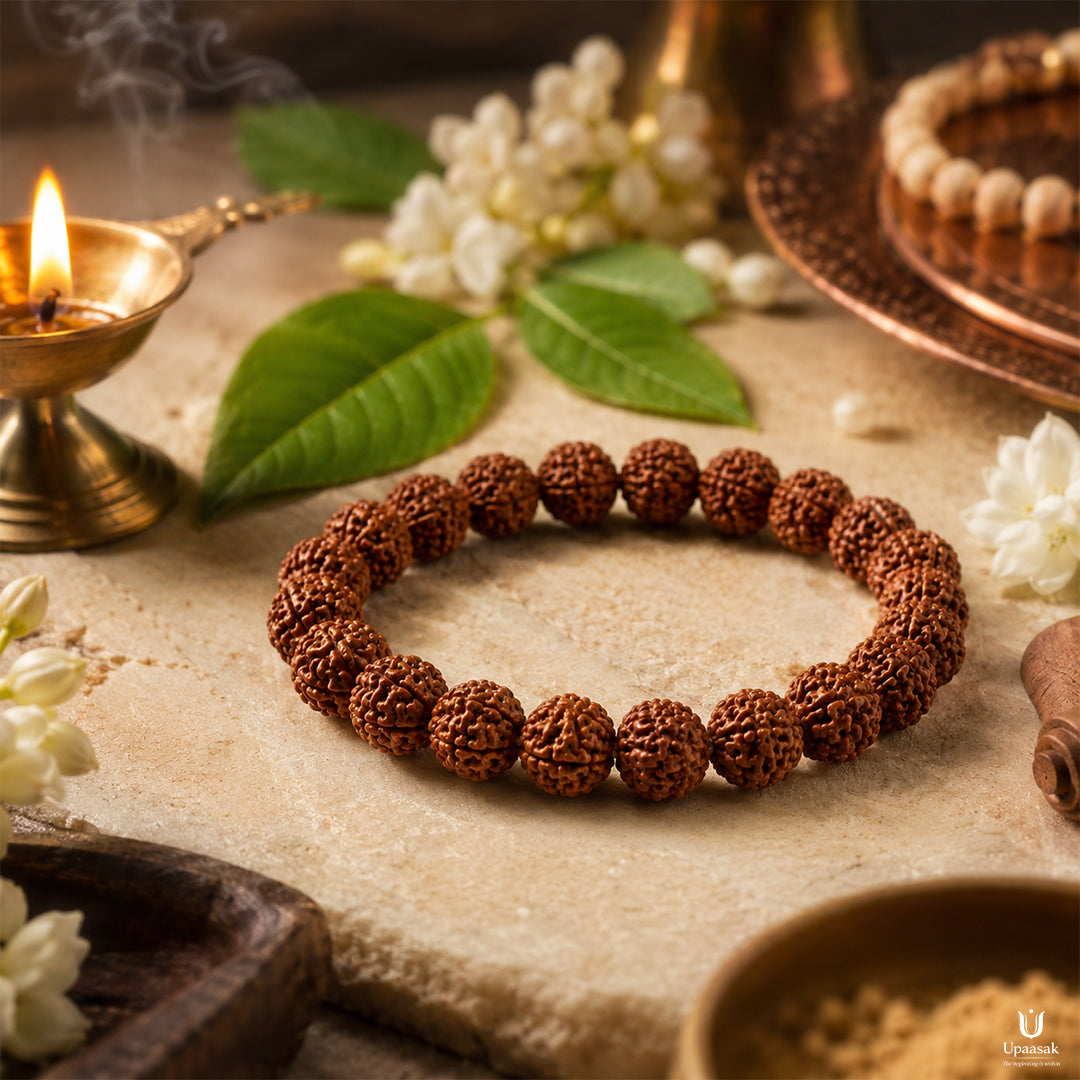
- Jupiter-ruled rashis (Dhanu, Meena) or during Jupiter Mahadasha: 5 Mukhi — deepens Jupiter's positive qualities. The natural 5 Mukhi Nepali Rudraksha directly serves this intention
- Mercury-influenced rashis (Mithun, Kanya): 4 Mukhi for communication and learning focus
- Combined intention (wealth + protection + peace): 5 Mukhi bracelet base with a single 7 Mukhi centrepiece bead
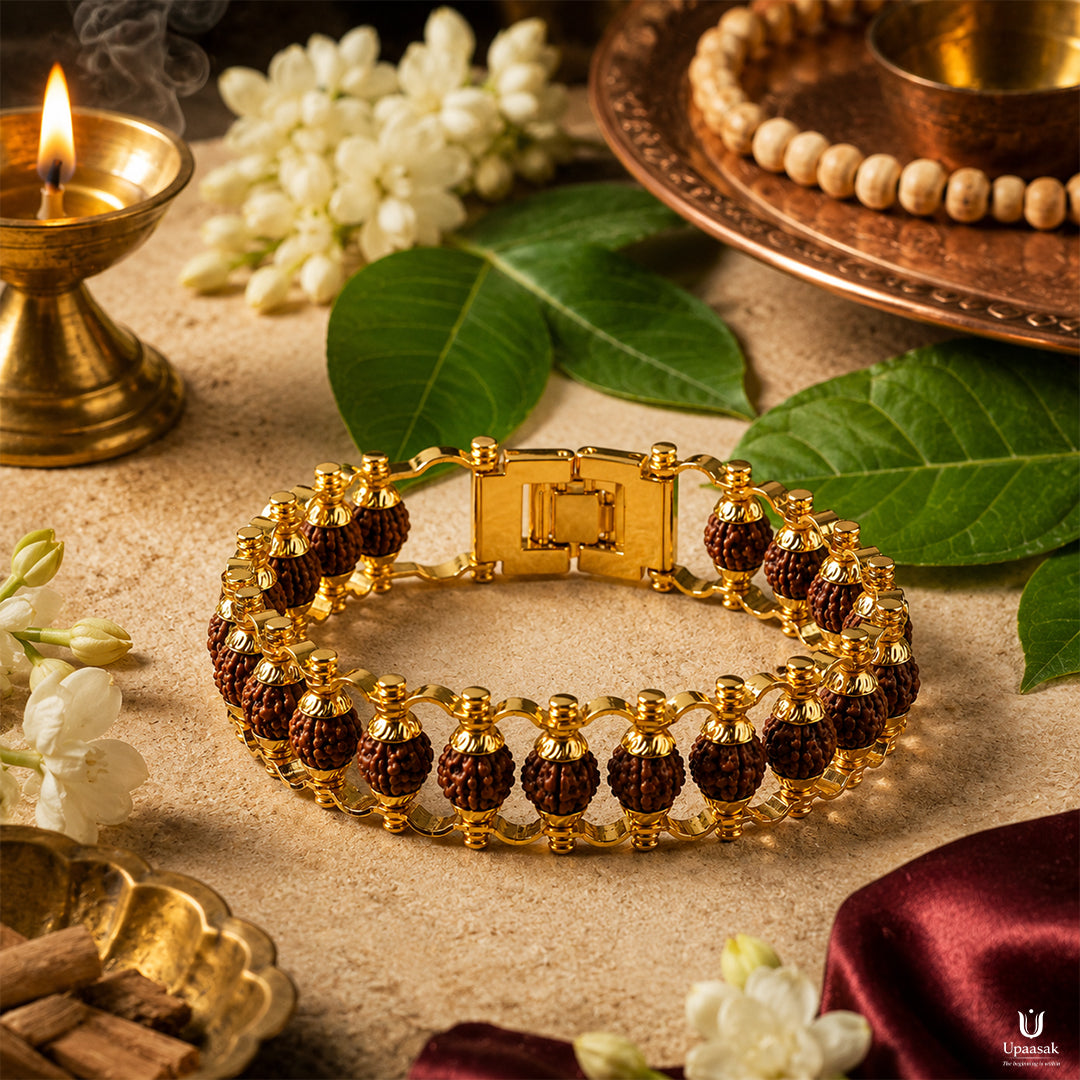
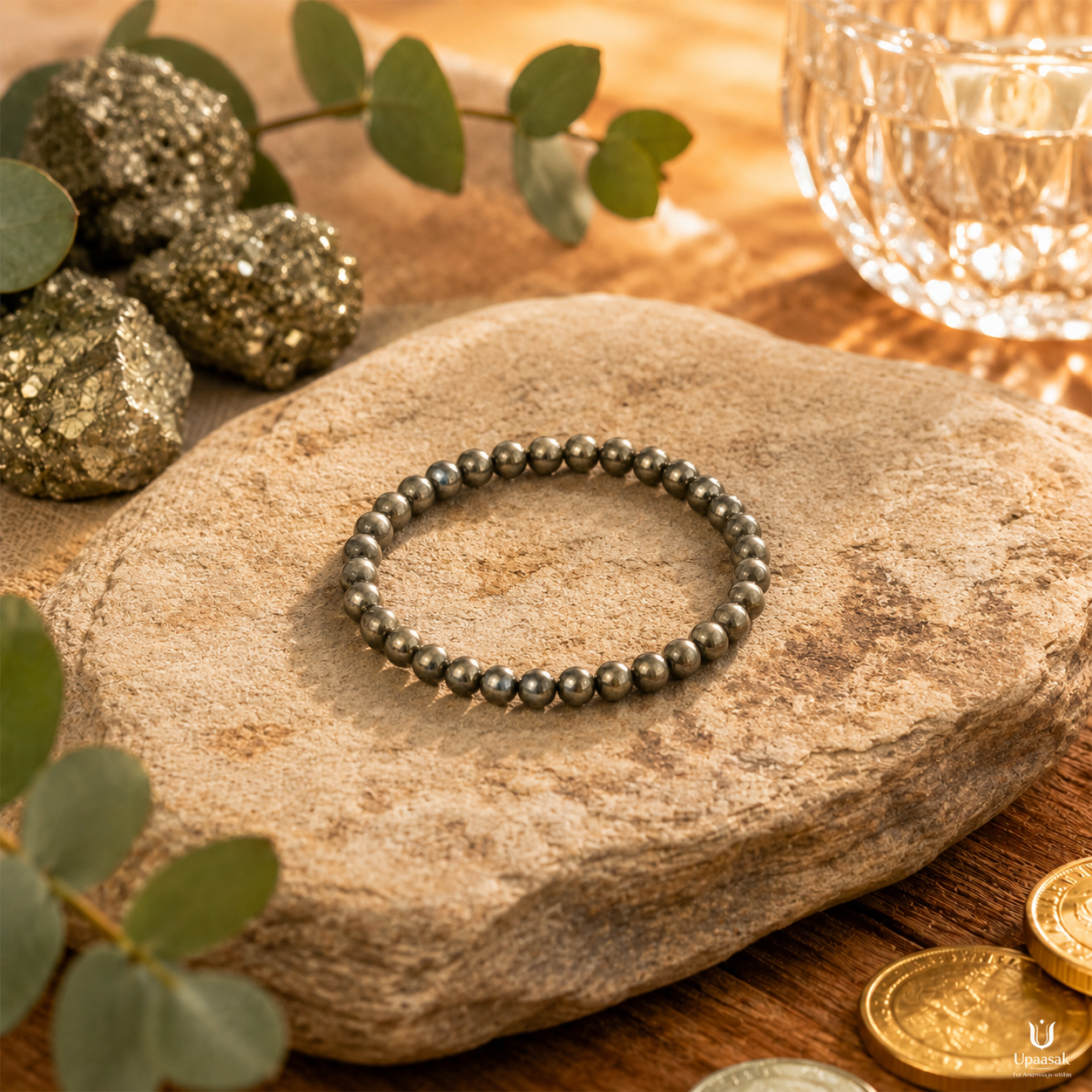
The Rudraksha bracelet for daily Shiva protection uses 5 Mukhi beads — universally suitable for any Rashi as a daily devotional piece. The gold plated Rudraksha bracelet offers the same Rashi-neutral suitability in a contemporary format. Explore the full Rudraksha collection for all Mukhi types available in both loose bead and bracelet formats.
When to Consult a Practitioner
Seek a qualified Vedic astrologer when:
- You want to wear Rudraksha specifically as a remedy for a difficult planetary period
- You are considering wearing multiple Mukhi types simultaneously
- You have complex or afflicted planetary placements in your birth chart
- You have been advised conflicting Mukhi recommendations by different sources
- You are combining Rudraksha with other gem remedies (Navratna, etc.)
A full birth chart assessment gives significantly more precise guidance than Rashi alone.
FAQ
Which Rashi can wear which Rudraksha?
Each Rashi has a traditionally associated Mukhi based on its ruling planet — Makar and Kumbha benefit from 7 Mukhi (Saturn), Dhanu and Meena from 5 Mukhi (Jupiter), Mithun and Kanya from 4 Mukhi (Mercury), and so on. However, the 5 Mukhi Rudraksha is universally suitable for all rashis without restriction.
Which Rudraksha is suitable for my zodiac sign?
For most people, the 5 Mukhi Rudraksha is the safest and most appropriate starting point for any Rashi. For specific astrological remedies, match the Mukhi's ruling planet to your Rashi's planetary needs — ideally with guidance from a qualified Jyotishi.
Can anyone wear 5 Mukhi Rudraksha?
Yes — the 5 Mukhi Rudraksha carries no restrictions by Rashi, gender, age, or lifestyle. It is the most universally recommended Rudraksha in all traditional texts and suits every zodiac sign equally.
Which Rudraksha is associated with each Rashi?
See the table above for traditional associations. In summary: Saturn-ruled rashis pair with 7 Mukhi, Jupiter-ruled with 5 Mukhi, Mercury-ruled with 4 Mukhi, Venus-ruled with 6 Mukhi, Mars-ruled with 3 Mukhi, Moon-ruled with 2 Mukhi, and Sun-ruled with 1 Mukhi. The 5 Mukhi remains universally appropriate for all.