Deciding which Rudraksha is best for bracelet use is one of the first questions any buyer faces — and the answer depends on your intention, your astrological profile if you follow Vedic tradition, and practical considerations around availability and authenticity. This guide compares the most commonly used Mukhi types in bracelet form, explains their traditional associations clearly, and helps you choose based on honest criteria.
What Does Mukhi Mean?
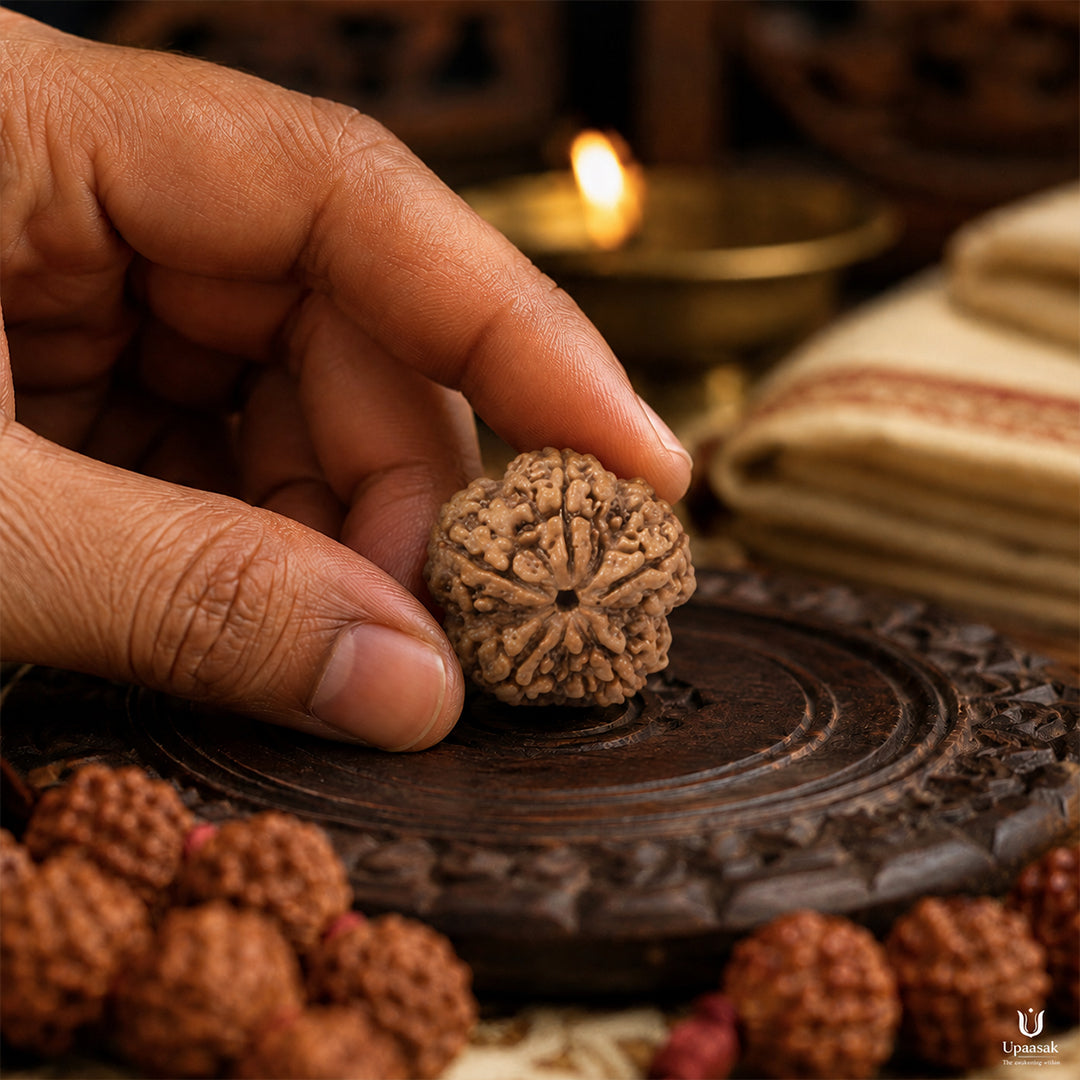
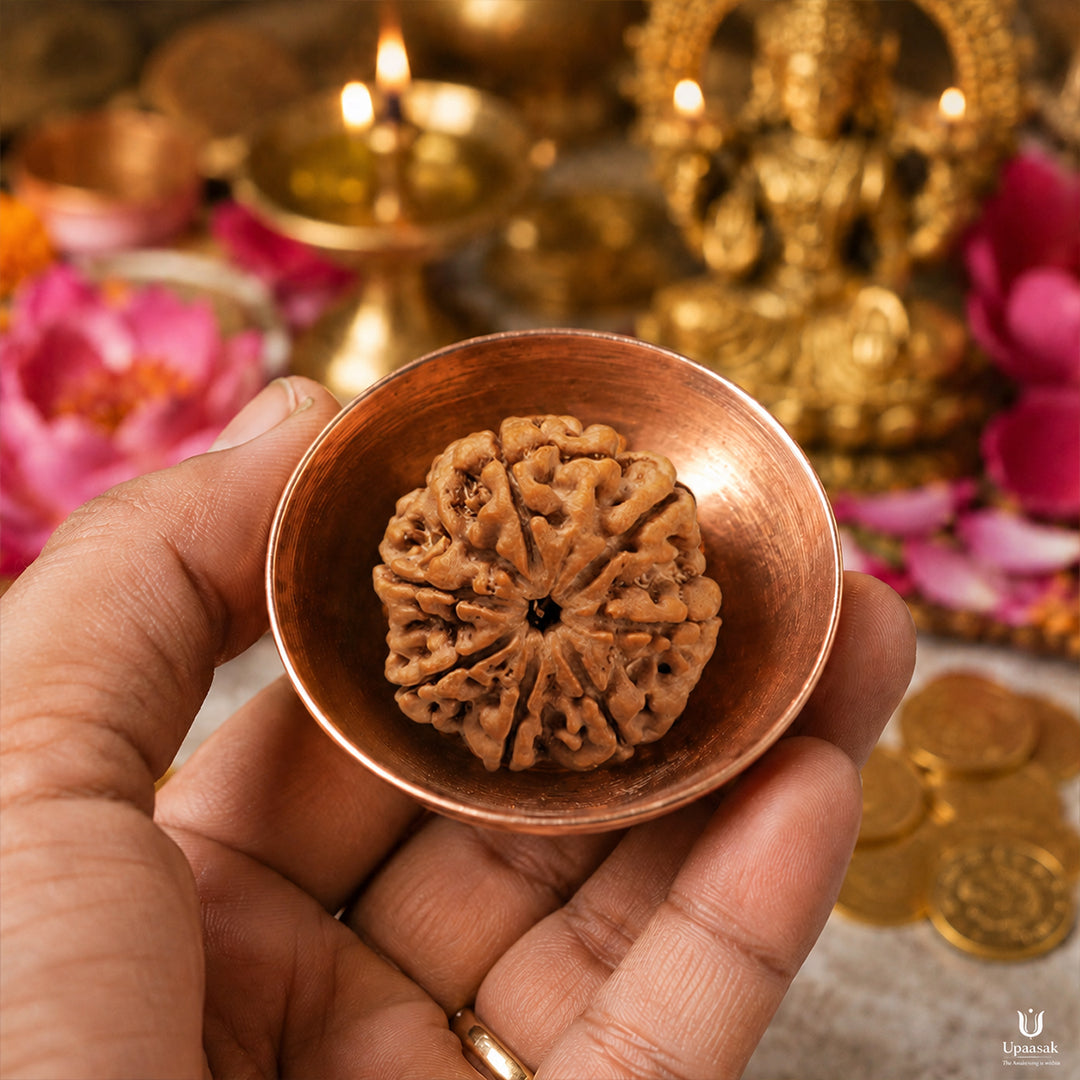
Before comparing types, understanding Mukhi is essential. Mukhi means "face" in Sanskrit — the naturally formed lines running from the top to the base of a Rudraksha bead, dividing it into segments. These lines:
- Form naturally as the seed grows on the Elaeocarpus ganitrus tree
- Correspond to internal seed compartments (verifiable by X-ray)
- Determine the bead's traditional identity and spiritual associations
- Cannot be artificially added without leaving detectable evidence
The Mukhi count is the single most important specification in any Rudraksha bracelet. It determines which deity, planet, and traditional properties the bead is associated with.
4 Mukhi Rudraksha
The 4 Mukhi Rudraksha has four natural faces and is associated with Lord Brahma — the deity of knowledge, creativity, and speech — and with the planet Mercury (Budh).
Traditional associations:
- Enhanced learning capacity and retention of knowledge
- Clarity and eloquence in communication and speech
- Creative thinking and intellectual sharpness
- Mercury's positive qualities — analytical ability, articulation, business acumen
Bracelet suitability:
- Suited to students, writers, teachers, communicators, and those in Mercury-governed professions
- No universal rashi restriction — but particularly relevant for Gemini (Mithun) and Virgo (Kanya) rashis ruled by Mercury
- Available as bracelet beads but less commonly found than 5 Mukhi
5 Mukhi Rudraksha
The 5 Mukhi Rudraksha is the most widely used Rudraksha for bracelet wear — and for clear reasons. It is associated with Lord Kalagni Rudra (a form of Shiva) and governed by Jupiter (Guru/Brihaspati).
Traditional associations:
- Mental peace and reduction of inner restlessness
- Focus and concentration — particularly relevant for study and work
- Lord Shiva's direct blessing and protection
- Jupiter's wisdom, spiritual growth, and dharmic prosperity
Why it dominates bracelet use:
| Reason | Detail |
|---|---|
| Universal suitability | No rashi, gender, or age restrictions |
| Availability | Most abundantly grown — accessible and fairly priced |
| Jupiter's benefic nature | Most universally positive planetary association |
| Shiva's representation | Wears all five of Shiva's aspects simultaneously |
| Daily wear appropriateness | No special dietary or lifestyle conditions required |
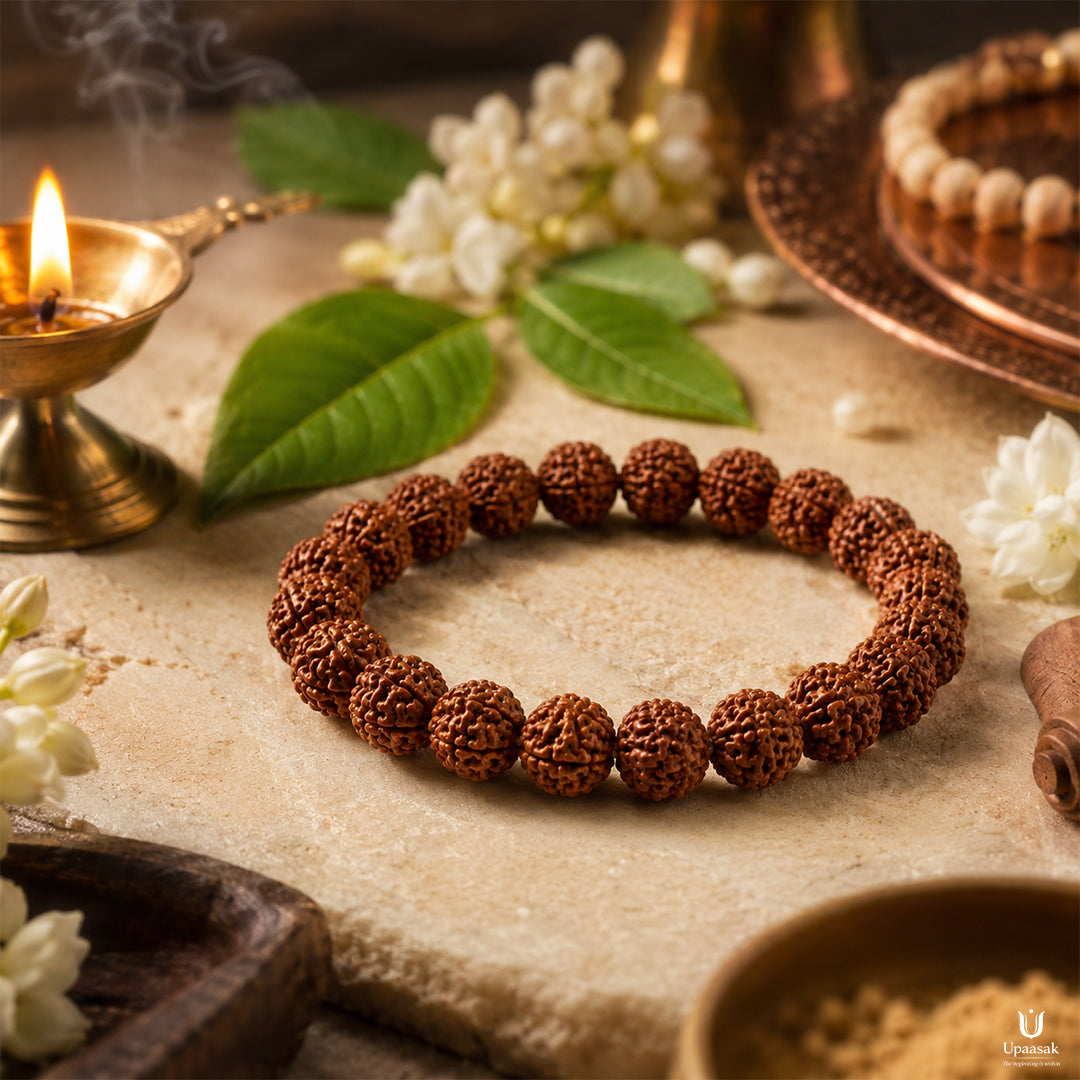
The natural 5 Mukhi Nepali Rudraksha represents the quality standard for bracelet beads — well-defined natural mukhis, Nepali origin, and universal traditional suitability. It is the first Rudraksha most practitioners recommend for anyone beginning a bracelet practice.
6 Mukhi Rudraksha
The 6 Mukhi Rudraksha carries six natural faces and is associated with Lord Kartikeya (Murugan) and the planet Venus (Shukra).
Traditional associations:
- Confidence, willpower, and courage in personal expression
- Harmony in relationships — personal and professional
- Creativity and aesthetic sensibility
- Venus's positive qualities — beauty, abundance, emotional fulfilment
Bracelet suitability:
- Suited to those navigating relationship challenges or creative pursuits
- Relevant for Taurus (Vrishabha) and Libra (Tula) rashis — both Venus-ruled
- Often paired with 5 Mukhi beads in multi-Mukhi combination bracelets
7 Mukhi Rudraksha
The 7 Mukhi Rudraksha is associated with Goddess Mahalakshmi and the planet Saturn (Shani) — making it among the most specific in its traditional application.
Traditional associations:
- Wealth attraction and financial abundance
- Relief from Saturn-related challenges — Sade Sati, Shani Mahadasha, Shani Dhaiya
- Karmic discipline and the removal of obstacles around prosperity
- Emotional stability during difficult Saturn transit periods
Bracelet suitability:
- Most relevant for those undergoing Saturn-related astrological challenges
- Particularly suitable for Makar and Kumbha rashis (Saturn-ruled)
- Often worn alongside 5 Mukhi in combination bracelets for a wealth-and-balance approach
- Slightly rarer than 5 Mukhi — reflected in higher per-bead cost
The natural 7 Mukhi Nepali Rudraksha is available for those with a specific Saturn-related or wealth-focused intention.
Which Mukhi Is Most Commonly Used in Bracelets?
The 5 Mukhi is the standard bracelet bead by a significant margin. Here is why, summarised:
- It is the only Mukhi with no traditional restrictions by rashi, gender, or lifestyle
- It represents Lord Shiva in his complete form — the deepest possible connection to Rudraksha's core significance
- It is the most available and fairly priced of all Mukhi types
- Traditional texts explicitly describe it as the most universally beneficial bead
Other Mukhi types are used in bracelets — but typically either as a single focal bead within a 5 Mukhi base bracelet, or as a specific astrological remedy recommended by a practitioner.
Can Different Mukhi Beads Be Combined?
Yes — combination bracelets using multiple Mukhi types are common in traditional practice. The most popular formats:
- 5 Mukhi base with single 7 Mukhi centrepiece: Universal suitability plus Saturn/wealth intention
- 5 Mukhi and 6 Mukhi alternating: Focus and creativity combined
- Full Navgraha bracelet: One bead of each Mukhi type (1 through 9) representing all nine planets
Combination bracelets are typically worn on the guidance of a Vedic astrologer or experienced practitioner rather than as a general everyday choice.
Choosing Based on Intention
Use this guide to match your primary intention with the most appropriate Mukhi:
| Primary Intention | Recommended Mukhi |
|---|---|
| General protection and peace | 5 Mukhi |
| Academic or communication focus | 4 Mukhi or 5 Mukhi |
| Wealth and financial clarity | 7 Mukhi |
| Confidence and relationships | 6 Mukhi |
| Beginning a Rudraksha practice | 5 Mukhi |
| Saturn-related astrological remedy | 7 Mukhi |
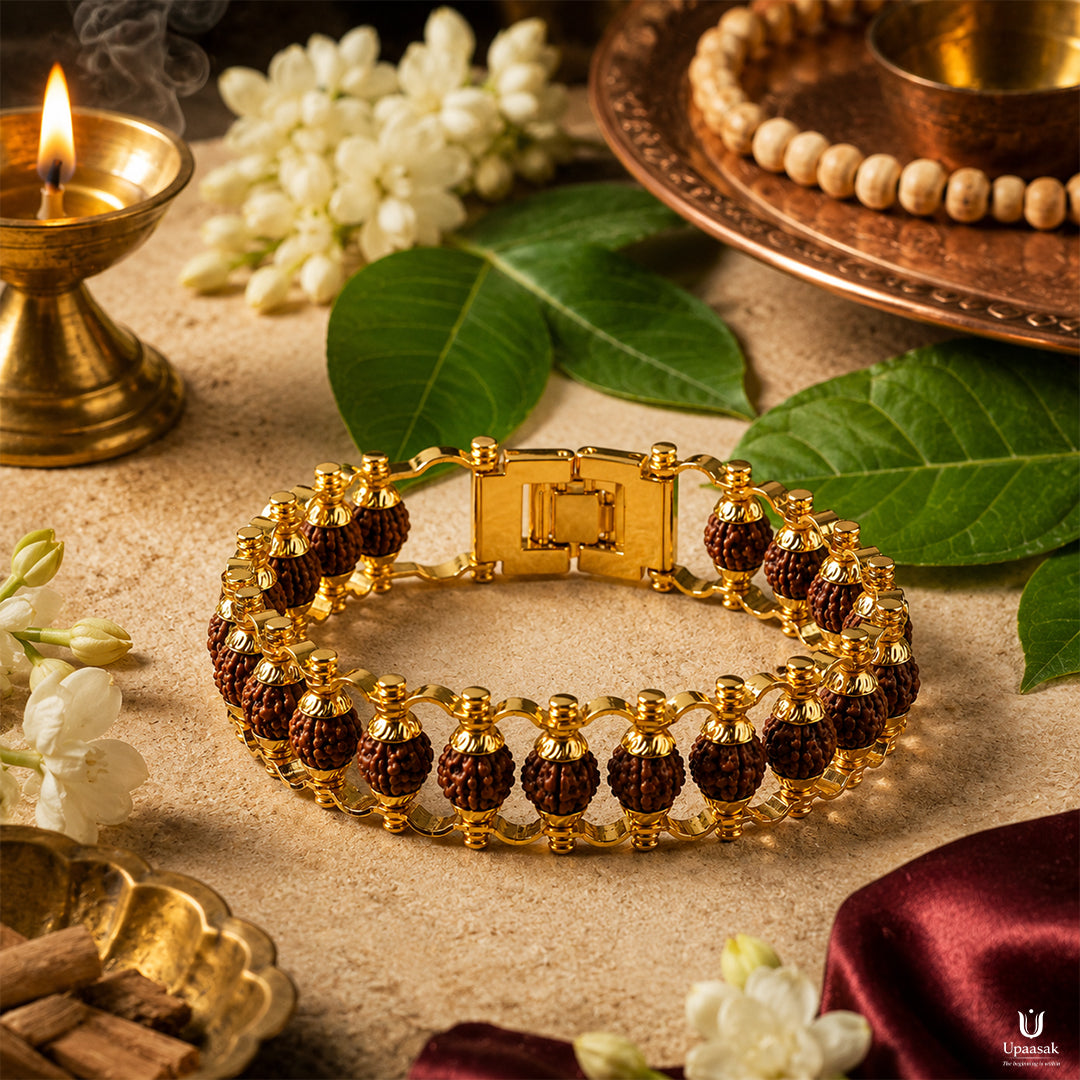
For daily wear without specific astrological guidance, the Rudraksha bracelet for daily Shiva protection using 5 Mukhi beads is the most universally sound choice. The gold plated Rudraksha bracelet offers the same spiritual foundation in a contemporary gold-toned format. Explore the complete Rudraksha collection for all available Mukhi types and bracelet formats.
FAQ
Which Rudraksha is best for bracelets?
The 5 Mukhi Rudraksha is the most universally recommended for bracelets — suitable for all genders, rashis, and age groups, associated with Lord Shiva and Jupiter, and the most widely available Mukhi in quality bracelet form.
Which is better — 4 Mukhi or 5 Mukhi?
For most people, 5 Mukhi is the better choice due to its universal suitability and broader traditional associations. 4 Mukhi is specifically suited to those with a Mercury-related intention — communication, learning, or creative expression.
Can a girl wear 5 Mukhi Rudraksha?
Yes — completely. The 5 Mukhi Rudraksha carries no gender restrictions in any traditional text. It is universally suitable for men, women, and children of all rashis and backgrounds.
Which Rudraksha is powerful to wear?
All Mukhi types carry specific traditional power within their domain. The 5 Mukhi is the most broadly powerful for everyday use — it represents Shiva's complete five-aspect form and Jupiter's universal benefic energy simultaneously.